Medical Genogram
Map your family's health history to identify genetic risks, inform preventive care, and empower better health decisions for you and future generations.
Why Medical Genograms Matter
Your family health history is one of the strongest predictors of your own health risks. A medical genogram visualizes this history, making patterns visible that might otherwise go unnoticed—like heart disease striking men in their 50s, or breast cancer appearing in multiple generations.
Healthcare providers use medical genograms for genetic counseling, cancer risk assessment, cardiac screening decisions, and preventive care planning. For individuals, it's a powerful tool for understanding your health legacy and taking proactive steps.
Identify Genetic Risks
See hereditary patterns that may affect your health
Inform Prevention
Guide screening schedules and preventive measures
Help Family Members
Share health information with relatives who share your genes
Medical Genogram Example
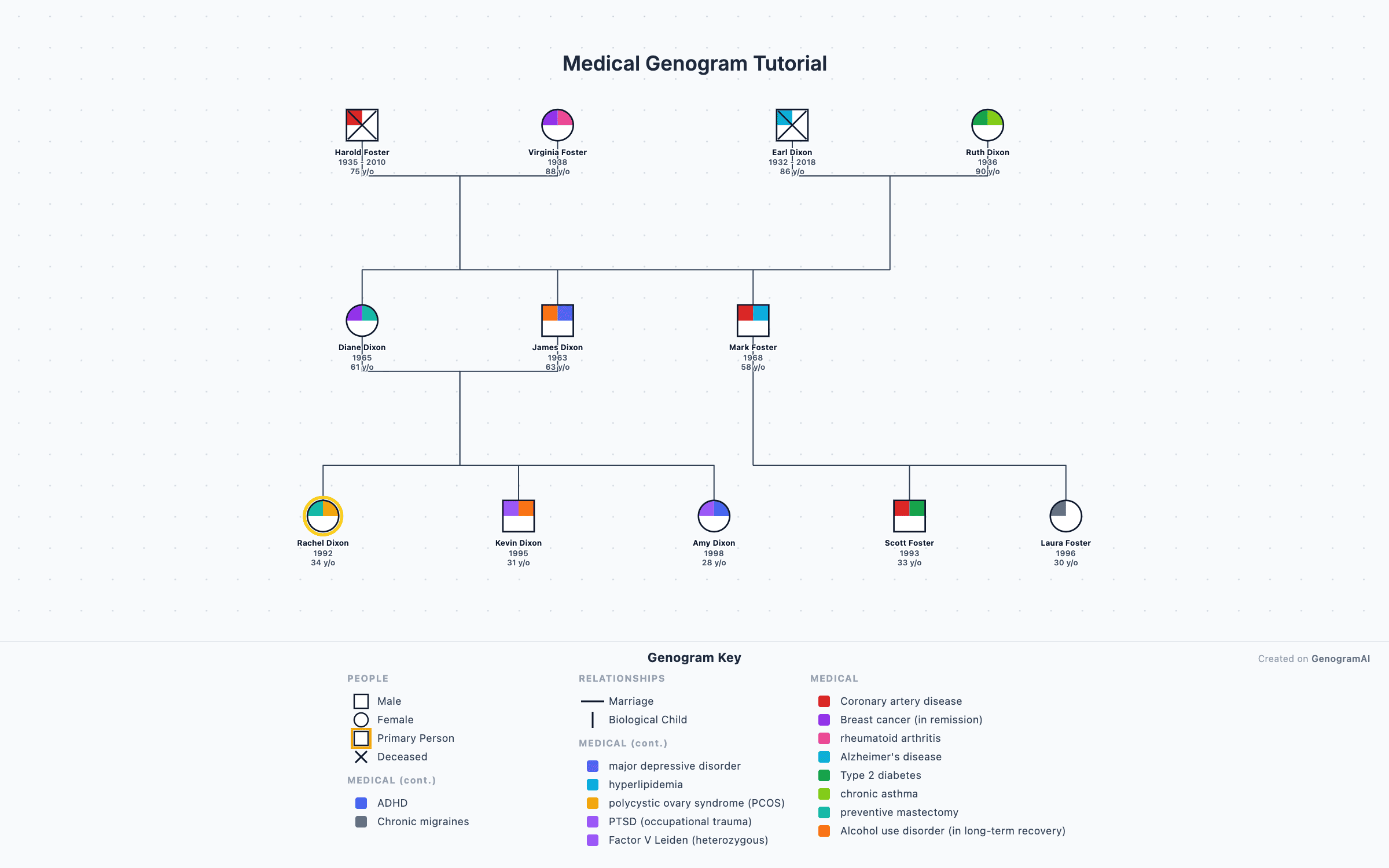
Below is a medical genogram example showing hereditary conditions tracked across three generations. Heart disease, diabetes, breast cancer, and depression are each assigned a quadrant — filled quadrants indicate an active or past condition, making patterns immediately visible to clinicians.
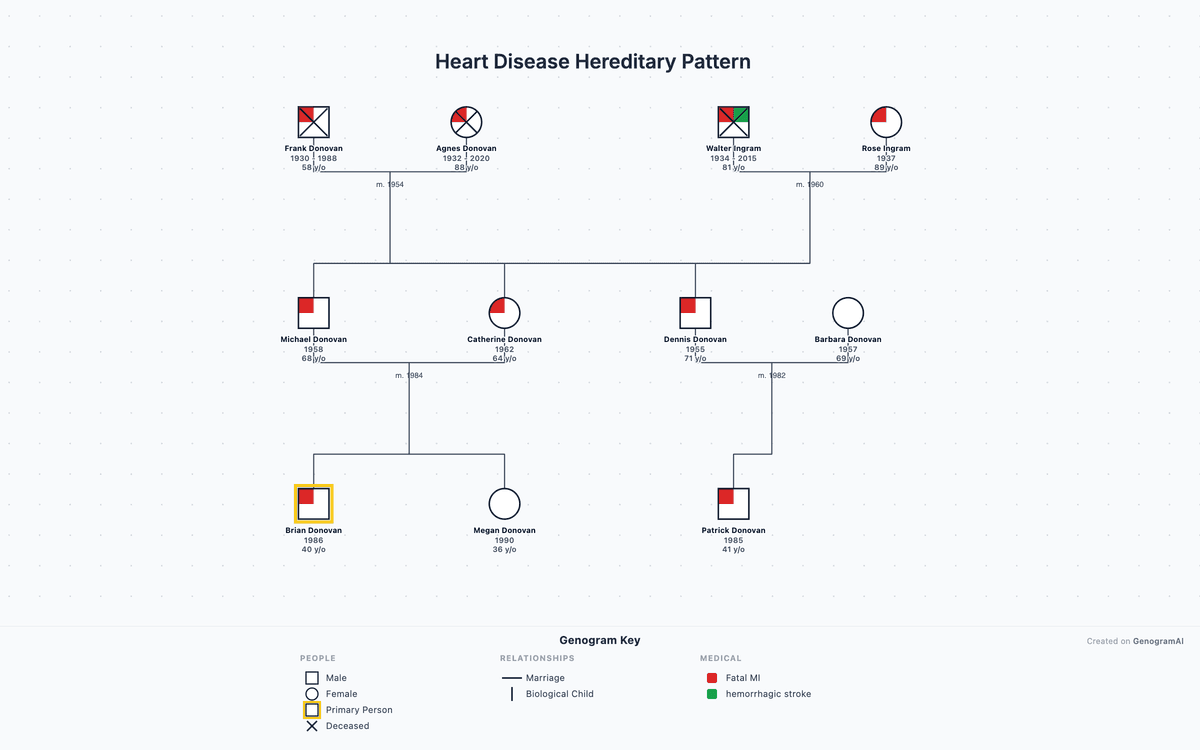
Heart Disease Pattern
Cardiovascular risk tracked across three generations

BRCA Cancer History
Hereditary breast cancer risk mapping

Genetic Counseling
How clinicians use genograms for risk assessment
What to Include in a Medical Genogram
For Each Family Member
- Current age or age at death
- Cause of death (if applicable)
- Major health conditions
- Age when condition was diagnosed
- Surgeries or major treatments
- Lifestyle factors (smoking, obesity)
Conditions to Track
- Heart disease and stroke
- Cancer (type, location, age)
- Diabetes (Type 1 or 2)
- Mental health conditions
- Autoimmune disorders
- Alzheimer's/dementia
- Birth defects
- Genetic syndromes
Medical Genogram Color Coding
Medical genograms use color coding to quickly identify conditions at a glance. Here's a common system used in clinical practice:
Red
Heart disease, hypertension, stroke
Pink
Breast cancer, reproductive cancers
Blue
Diabetes, metabolic conditions
Purple
Mental health, neurological
Green
Colon/GI cancers
Yellow
Lung conditions, respiratory
Orange
Substance abuse, addiction
Gray
Cause of death unknown
Condition Status Indicators
Following McGoldrick's standard, each condition can be marked with a status to show whether it's currently active, in recovery, or suspected:
Solid fill — current condition
Striped fill — in remission
Faded fill — unconfirmed
Pro Tip
Use the status indicator to distinguish active conditions from those in recovery or remission. This is especially valuable for tracking substance abuse recovery and cancer remission across generations, following the McGoldrick standard for genogram notation.
Red Flags in Medical Genograms
These patterns suggest higher genetic risk and warrant discussion with a healthcare provider:
Same condition in multiple generations
Example: Grandmother, mother, and aunt all had breast cancer
Earlier-than-typical onset
Example: Heart attack before age 55 (men) or 65 (women)
Multiple family members with same cancer
Example: Two or more first-degree relatives with colon cancer
Rare cancers
Example: Male breast cancer, ovarian cancer at young age
Bilateral or multiple primary cancers
Example: Cancer in both breasts, or multiple different cancers
Ashkenazi Jewish ancestry with breast/ovarian cancer
Example: Higher rate of BRCA mutations in this population
How to Use Your Medical Genogram
Share with Your Doctor
Bring your medical genogram to annual physicals and specialist appointments. It provides immediate context for your health risks and helps providers make informed recommendations about screening and prevention.
Consider Genetic Counseling
If your genogram shows concerning patterns (especially with cancer or early-onset heart disease), ask about genetic counseling. A counselor can assess whether genetic testing might be appropriate.
Adjust Screening Schedules
Family history often changes recommended screening ages. For example, if a parent had colon cancer at 50, you should typically start screening at 40 (10 years before their diagnosis age).
Share with Family
Your siblings, children, and other relatives share your genetic background. Sharing your medical genogram (or encouraging relatives to contribute to it) helps everyone understand their risks.
Update Regularly
Family health histories change. Update your genogram when family members receive new diagnoses, and review it before major medical appointments.
Privacy Considerations
Medical genograms contain sensitive health information. Consider these factors:
- Get permission before adding other family members' health information
- Store digital genograms securely (GenogramAI uses AES-256 encryption)
- Be aware that genetic information may have insurance implications
- Discuss sharing preferences with family members before distributing
Medical Genogram Template
A medical genogram template gives you a ready-made structure to fill in your own family's health history. The most useful templates follow the three-generation standard and include quadrant notation for tracking multiple condition categories at once.
What a Good Template Includes
- Three-generation layout (grandparents → parents → children)
- Quadrant notation for up to 4 condition categories
- Color legend for each condition type
- Age and cause of death fields per person
- Risk summary section for generation 3
- Space for notes on age of onset
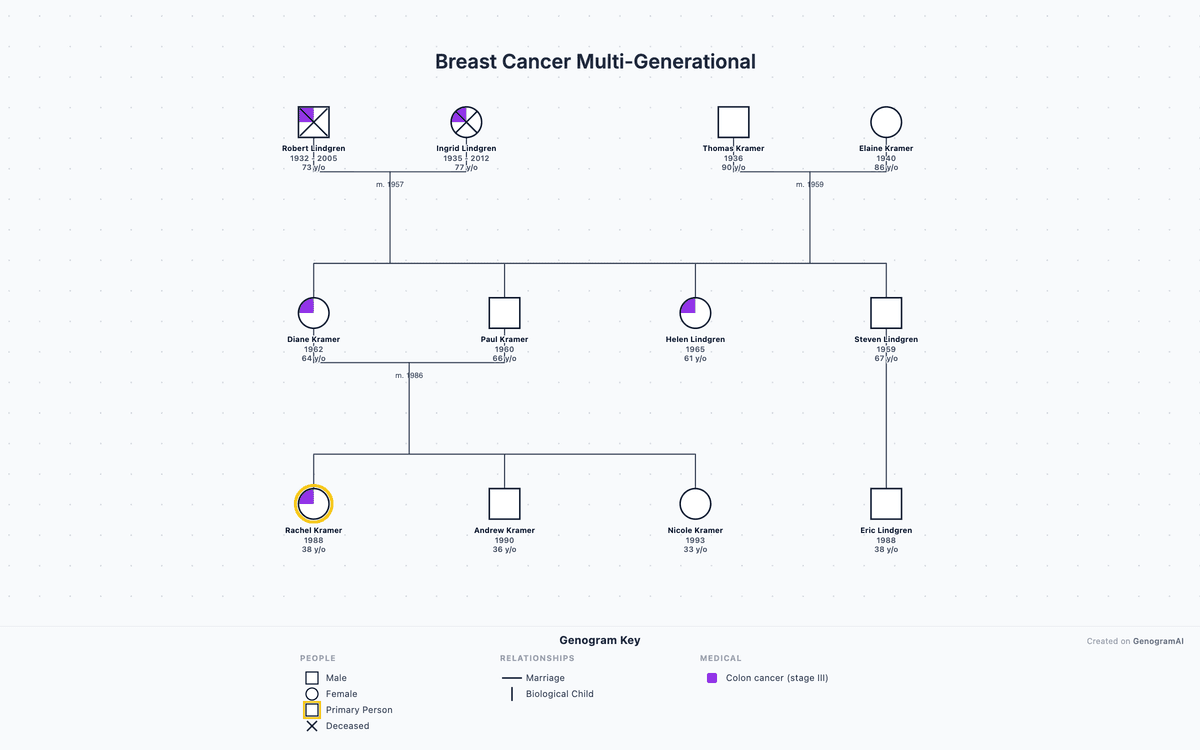
Multigenerational Cancer Template
Three-generation layout with cancer history notation
Start from a Template in GenogramAI
GenogramAI includes built-in medical genogram templates. Describe your family and the AI generates a properly structured diagram with quadrant notation, color coding, and age-of-onset labels — ready to share with your doctor or genetic counselor.
Use a Medical Genogram TemplateFrequently Asked Questions
What conditions should I include in a medical genogram?
Include conditions with genetic components: heart disease, cancer (especially breast, colon, ovarian), diabetes, mental health conditions, substance abuse, autoimmune disorders, birth defects, and any condition that appears in multiple family members. Also note causes of death and age at diagnosis.
How many generations should a medical genogram include?
Ideally three generations (you, parents, grandparents), but four generations is better for identifying patterns. Include aunts, uncles, and cousins as well, since they share genetic information. The more complete the picture, the better the risk assessment.
Can a medical genogram predict if I will get a disease?
A medical genogram shows risk patterns, not predictions. Having family members with a condition increases your statistical risk but doesn't guarantee you'll develop it. The genogram helps healthcare providers recommend appropriate screening and preventive measures.
Should I bring a medical genogram to doctor appointments?
Yes! A medical genogram is one of the most valuable tools you can bring. It gives providers instant insight into your genetic risk factors and helps them make informed recommendations about screening, testing, and prevention strategies.
What if I don't know my family medical history?
Document what you know and note what's unknown. Even partial information is valuable. For adoptees or those with limited family contact, genetic testing can provide some insights. Unknown family history itself is important medical information.
What is the difference between a medical genogram and a pedigree chart?
A pedigree chart is a genetics diagram used primarily in research and clinical genetics to show inheritance of a single trait or condition using standardized symbols. A medical genogram is broader — it tracks multiple conditions simultaneously, includes relationship dynamics, and is used in primary care, therapy, and counseling settings. Genograms also capture psychosocial context that pedigree charts omit, such as family relationships and emotional patterns alongside health data.
Is there a free medical genogram template?
Yes. GenogramAI offers free medical genogram templates you can use immediately — no account required to start. The templates include three-generation layouts with quadrant notation for tracking up to four condition categories, color-coded by condition type. You can customize and export the result to share with your healthcare provider.
Further Reading
- McGoldrick, M., Gerson, R., & Petry, S. — Genograms: Assessment and Intervention (4th ed.). W.W. Norton & Company, 2020
- DeMaria, R., Weeks, G., & Twist, M. — Focused Genograms: Intergenerational Assessment of Individuals, Couples, and Families (2nd ed.). Routledge, 2017
- Bennett, R.L. — Genetic Family History: The Three-Generation Pedigree. American Journal of Human Genetics, 2002
- Bennett, R.L., et al. — Standardized Human Pedigree Nomenclature. Journal of Genetic Counseling, 17(5), 424–433, 2008
Create Your Medical Genogram Today
Use GenogramAI to map your family health history. Our medical view mode makes it easy to track conditions across generations.
Start Your Medical Genogram