Analysis guide
Genogram interpretation: how to read family patterns
Quick answer
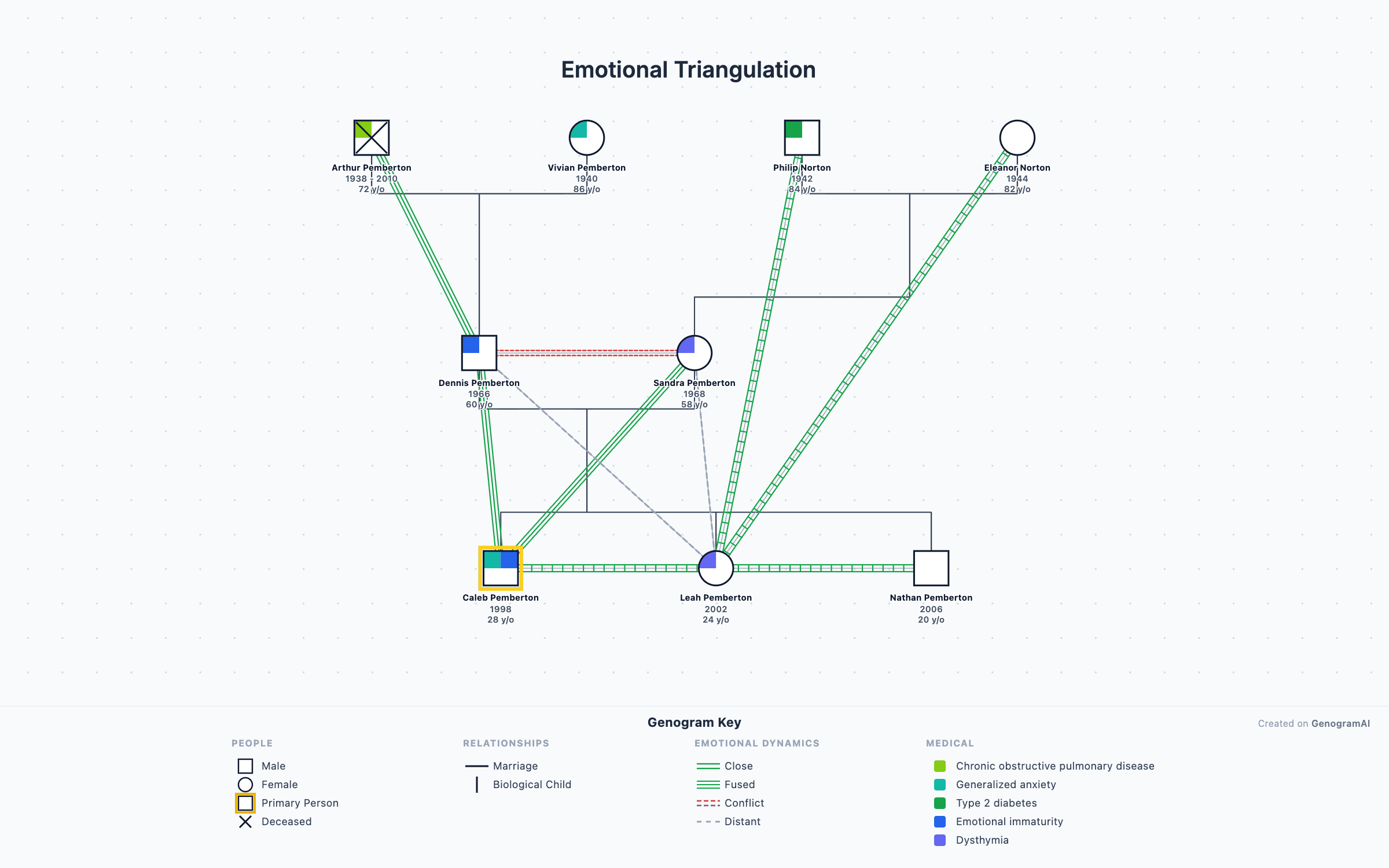
How do you interpret a genogram?
A genogram is more than a family diagram. It is a clinical document that reveals patterns invisible in verbal history alone. Learning to interpret genograms means training your eye to see structure, relationships, and multigenerational themes.
Good genogram interpretation combines systematic analysis with clinical intuition. You look for what's there, what's missing, what repeats, and what stands out. Over time, patterns jump out that would take hours to uncover through conversation alone.
Key principle
What do the relationship lines mean?
| Line | Relationship | How it is drawn | What it suggests |
|---|---|---|---|
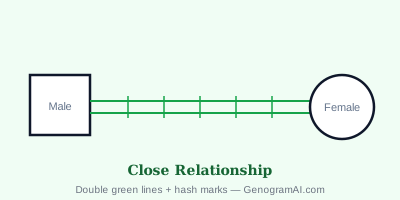 | Close | Two parallel lines | A strong, healthy bond |
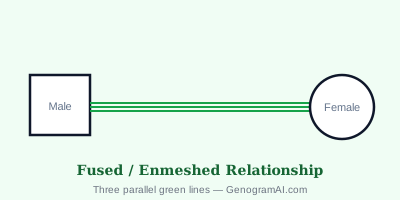 | Fused / enmeshed | Three parallel lines | Over-closeness; blurred boundaries |
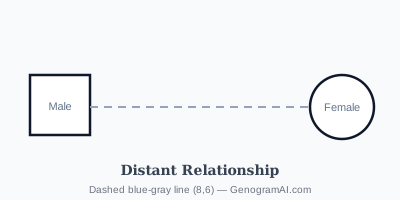 | Distant | Single dashed line | Little contact or emotional connection |
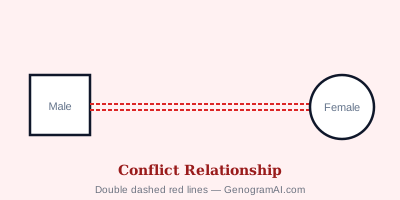 | Conflict | Two dashed lines | Ongoing tension, lower intensity |
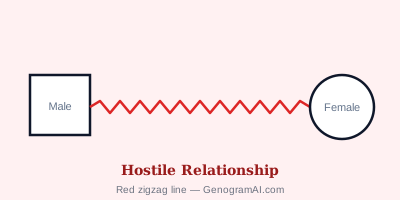 | Hostile | Zigzag line | Open hostility |
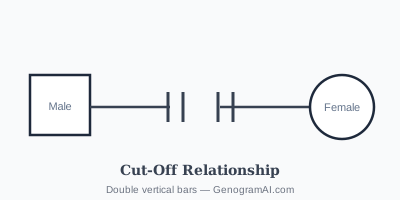 | Cutoff | Line broken by a gap | Emotional cutoff or estrangement |
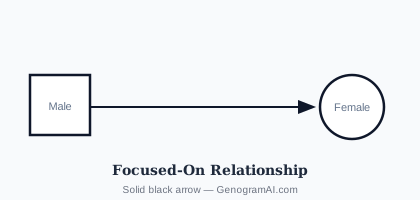 | Focused on | Line with an arrow | One person's attention centred on another |
The four levels of interpretation
- 1
Structural
The basic "who" and "what" of the family
- Family composition (nuclear, blended, single-parent)
- Generations represented
- Deaths and ages at death
- Births, marriages, divorces
- Geographic distribution
- Missing information or gaps
- 2
Relational
The quality and nature of connections
- Close vs. distant relationships
- Enmeshed/fused patterns
- Conflict and hostility
- Cutoffs and estrangements
- Alliances and coalitions
- Triangles and mediators
- 3
Functional
How the family operates as a system
- Roles (caretaker, scapegoat, hero)
- Communication patterns
- Problem-solving approaches
- How anxiety is managed
- Who carries symptoms
- Decision-making structure
- 4
Multigenerational
Patterns across time and generations
- Repeating relationship patterns
- Transmitted health conditions
- Recurring life events or ages
- Inherited roles and expectations
- Unresolved issues that echo forward
- Breaks from or continuations of patterns
Worked example: reading one genogram through the four levels
| Level | What to notice in this genogram | Hypothesis to explore |
|---|---|---|
| Structural | Three generations; parents still married; two children, an older son and a younger daughter | Who else lives nearby or is involved day to day? |
| Relational | Conflict between the parents; close or fused lines from each parent to the son; distance around the daughter | Closeness with the son rises as the couple's distance rises: a classic triangle |
| Functional | The son acts as mediator, confidant and emotional regulator; he carries the anxiety | His anxiety may be a symptom of the position, not only of the individual |
| Multigenerational | Look at the grandparents' marriages and whether a child was pulled into the middle there too | Was this triangle learned? Detriangling the son is a possible goal |
Genogram interpretation checklist
Structure questions
- How many generations are represented?
- What is the family composition?
- Who has died? At what ages?
- Are there divorces, remarriages, blended families?
- What information is missing?
- Where do family members live?
Relationship questions
- Where are the close relationships?
- Where is there conflict or distance?
- Are there cutoffs? Between whom?
- Can you identify triangles?
- Who is central? Who is peripheral?
- How do relationship patterns compare across generations?
Pattern questions
- What patterns repeat across generations?
- Are there similar ages for key events?
- Do the same roles appear in each generation?
- How is anxiety managed, and through whom or what?
- What themes emerge (loss, addiction, achievement)?
- Where do patterns break or change?
Clinical questions
- How does the presenting problem fit the family pattern?
- What resources are visible in the family?
- What might be maintaining the current issue?
- Where are opportunities for intervention?
- What would be different if the pattern changed?
- What does the client need to understand?
What patterns should you look for in a genogram?
Repetitive Relationship Structures
Similar relationship patterns appearing in each generation
- Oldest daughters becoming family caretakers
- Men who cut off from their fathers
- Marriages that end around the same year mark
- Triangles forming in each generation
Clinical significance: Reveals learned patterns that are transmitted through family culture and modeling
Anniversary Reactions
Significant events occurring at similar ages or dates across generations
- Deaths at similar ages
- First marriages at same age as parent
- Symptoms emerging when child reaches age parent was traumatized
- Crises around anniversary dates
Clinical significance: Suggests unresolved issues or unconscious identification with family members
Symptom Concentration
Physical or mental health symptoms clustering in certain family members
- One child in each generation who struggles
- Health conditions following loss or stress
- The "identified patient" across generations
- Addiction appearing in specific family positions
Clinical significance: May indicate family projection process or anxiety absorption roles
Complementary Patterns in Couples
Partners who fit together in predictable ways based on family-of-origin
- Pursuer-distancer dynamics
- Overfunctioner-underfunctioner pairings
- One from enmeshed family, one from distant family
- Both having similar unresolved issues
Clinical significance: Helps couples understand attraction and conflict in systemic terms
Loss and Replacement
New relationships or births following significant losses
- Child born shortly after death (replacement child)
- Quick remarriage after spouse's death
- New relationship filling role of lost family member
- Naming children after deceased relatives
Clinical significance: May indicate unresolved grief or attempt to fill emotional gaps
Cutoff Chains
Patterns of emotional cutoff repeating through generations
- Father-son cutoffs in each generation
- Siblings who stop speaking after parental death
- Geographic distance as emotional management
- Cutoffs after similar triggering events
Clinical significance: Indicates unresolved fusion—cutoff is pseudo-independence, not differentiation
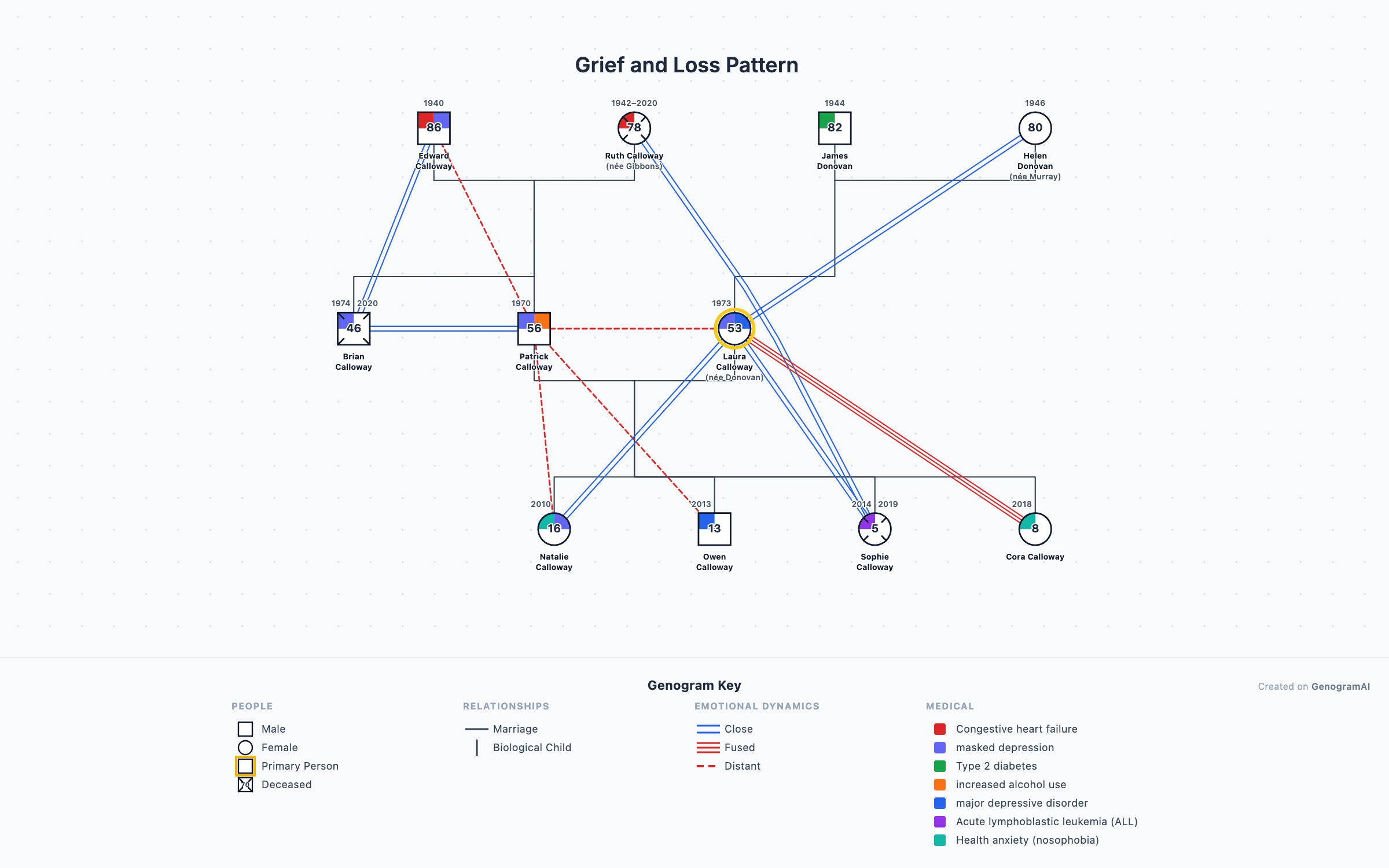
Genogram interpretation: questions
What should I look for when interpreting a genogram?
Look for patterns that repeat across generations: similar relationship dynamics, recurring health conditions, repeated life events at similar ages, roles that get passed down (like caretaker or black sheep), and how family members respond to stress and conflict. Also note what's missing—gaps often indicate cutoffs or secrets.
How do I identify triangles in a genogram?
Look for three-person patterns where two people relate through or around a third. Common signs: enmeshed mother-child with distant father, one parent always "in the middle" of conflicts, a child who carries anxiety for the couple. The relationship lines reveal triangles—look for where closeness in one dyad corresponds with distance in another.
What do relationship lines tell me?
Relationship lines reveal emotional dynamics. In standard notation, two parallel lines show a close relationship; three parallel lines show a fused or enmeshed one; a single dashed line shows distance; a zigzag shows hostility (GenogramAI also offers a lower-intensity Conflict line drawn as two dashed lines); and a line broken by a gap or slashes shows a cutoff. The pattern of lines across the genogram reveals the family's emotional landscape—where anxiety flows, who's connected, who's isolated.
How do I present genogram interpretations to clients?
Present observations tentatively and collaboratively: "I notice a pattern—what do you make of that?" Let clients make their own connections rather than lecturing. Use the visual to prompt reflection: "Looking at this, what stands out to you?" Share hypotheses but remain curious about the client's perspective.
Can genogram interpretation be wrong?
Genogram interpretation involves clinical hypotheses, not certainties. Patterns may have different meanings in different cultural contexts. Clients may have information that changes the interpretation. Present observations as tentative and stay curious. The goal is understanding, not diagnosis.
Further Reading
- McGoldrick, M., Gerson, R., & Petry, S. — Genograms: Assessment and Treatment (4th ed.). W.W. Norton & Company, 2020
- Bowen, M. — Family Therapy in Clinical Practice. Jason Aronson, 1978
- DeMaria, R., Weeks, G., & Twist, M. — Focused Genograms: Intergenerational Assessment of Individuals, Couples, and Families (2nd ed.). Routledge, 2017
- McGoldrick, M., Gerson, R., & Shellenberger, S. — Genograms: Assessment and Intervention (2nd ed.). W.W. Norton & Company, 1999