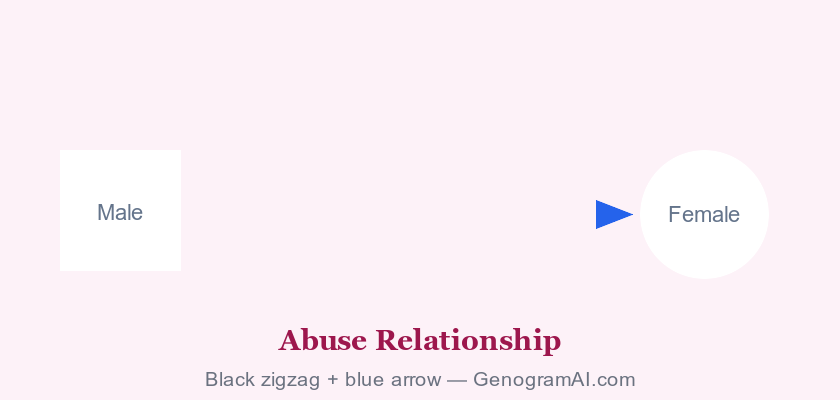
Abuse symbols in genograms document patterns of harm within family systems. According to standard genogram notation, abuse is indicated using zigzag lines with directional arrows showing the perpetrator-victim dynamic. Different symbols distinguish emotional, physical, and sexual abuse.
Safety First
If you or someone you know is experiencing abuse, please seek help immediately. Documentation of abuse patterns in therapy should always be accompanied by safety planning.
Arrow direction indicates direction of abuse (from perpetrator toward victim)
Understanding Abuse Symbols in Genograms
Documenting abuse patterns in genograms requires careful attention to standard notation, clinical sensitivity, and ethical considerations. According to McGoldrick, Gerson, and Petry (2020):
"A zigzag line with an arrow that is not filled in indicates emotional abuse"
"A zigzag line with an arrow filled in indicates physical abuse in the direction of the arrow"
"A zigzag line with a filled in arrow and two straight lines on the sides indicates sexual abuse toward the person to whom the arrow points"
Key Principle: Directionality
Unlike most emotional relationship symbols which are bidirectional, abuse symbols include arrows to show directionality. The arrow points from the perpetrator toward the victim, documenting the power imbalance inherent in abusive relationships.
Types of Abuse in Genogram Notation
Emotional/Psychological Abuse
Emotional abuse encompasses patterns of behavior that damage a person's psychological wellbeing. This includes:
Verbal attacks, constant criticism, humiliation
Threats and intimidation
Gaslighting and manipulation
Isolation from support systems
Controlling behavior
Emotional neglect (particularly parent-child)
Symbol: Zigzag line with unfilled (outline) arrow pointing toward the victim.
Physical Abuse
Physical abuse involves any intentional physical harm or violence. This includes:
Hitting, slapping, punching, kicking
Pushing, shoving, grabbing
Use of weapons or objects to cause harm
Physical restraint or confinement
Destruction of property to intimidate
Symbol: Zigzag line with filled (solid) red arrow pointing toward the victim.
Sexual Abuse
Sexual abuse encompasses any non-consensual sexual contact or exploitation. In family systems, this often involves power differentials (adult-child, authority figure, or coercion within intimate relationships).
Symbol: Zigzag line with filled arrow AND two parallel lines, indicating the most severe violation of boundaries.
Clinical Responsibility
When documenting abuse in genograms, clinicians have mandatory reporting obligations if abuse involves minors or vulnerable adults. Safety planning must precede any therapeutic exploration of abuse patterns. The documentation itself may become part of legal proceedings.
Clinical Considerations
Assessment Sensitivity
Asking about abuse requires skill and timing. McGoldrick notes that "asking about toxic issues such as sexual or physical abuse may not be possible during the first interview, especially when clients might be putting themselves in jeopardy by responding in front of another family member."
Safety Planning
Before documenting current abuse:
Assess immediate safety risks
Develop a safety plan
Identify resources and support systems
Understand mandatory reporting requirements
Consider who has access to the genogram
Historical vs. Current Abuse
Genograms often document historical abuse patterns that no longer pose immediate danger but profoundly shaped family dynamics. These patterns help explain:
Current relationship difficulties
Intergenerational trauma transmission
Attachment patterns
Mental health presentations
Family secrets and cutoffs
Multigenerational Abuse Patterns
Pattern Recognition
Abuse often appears across multiple generations. Mapping these patterns can:
Help survivors understand their experience in family context
Identify family members who may have been victimized
Reveal enabling or protective dynamics
Inform intervention to break cycles
Related Concepts
Neglect
Neglect—failure to provide necessary care, supervision, or support—is sometimes documented separately from active abuse. While not included in the standard abuse symbols, neglect is a critical pattern to note, particularly in parent-child relationships.
Control
Controlling relationships, where one person dominates another's decisions, activities, or access to resources, may be documented with a directional arrow without the zigzag. This captures power imbalance that may not constitute abuse but significantly impacts relationship dynamics.
How to Use These Symbols in GenogramAI
Steps to Document Abuse:
1Press E to activate the Emotional Relationship tool
2Click on the perpetrator (person doing the abusing)
3Drag to the victim (arrow will point this direction)
4Select appropriate abuse type from the menu
5Document timeframe, known incidents, and current status (historical vs. ongoing)
Therapeutic Applications
Using Abuse Documentation Therapeutically
Validation: Naming abuse on the genogram validates the survivor's experience
Pattern interruption: Seeing multigenerational patterns can motivate change
Family context: Understanding family dynamics around abuse aids healing
Protective factors: Identifying who protected (or failed to) informs treatment