9 genogram examples
Clinical Fictional Case Study Genograms
Quick answer
All 9 clinical case studies examples
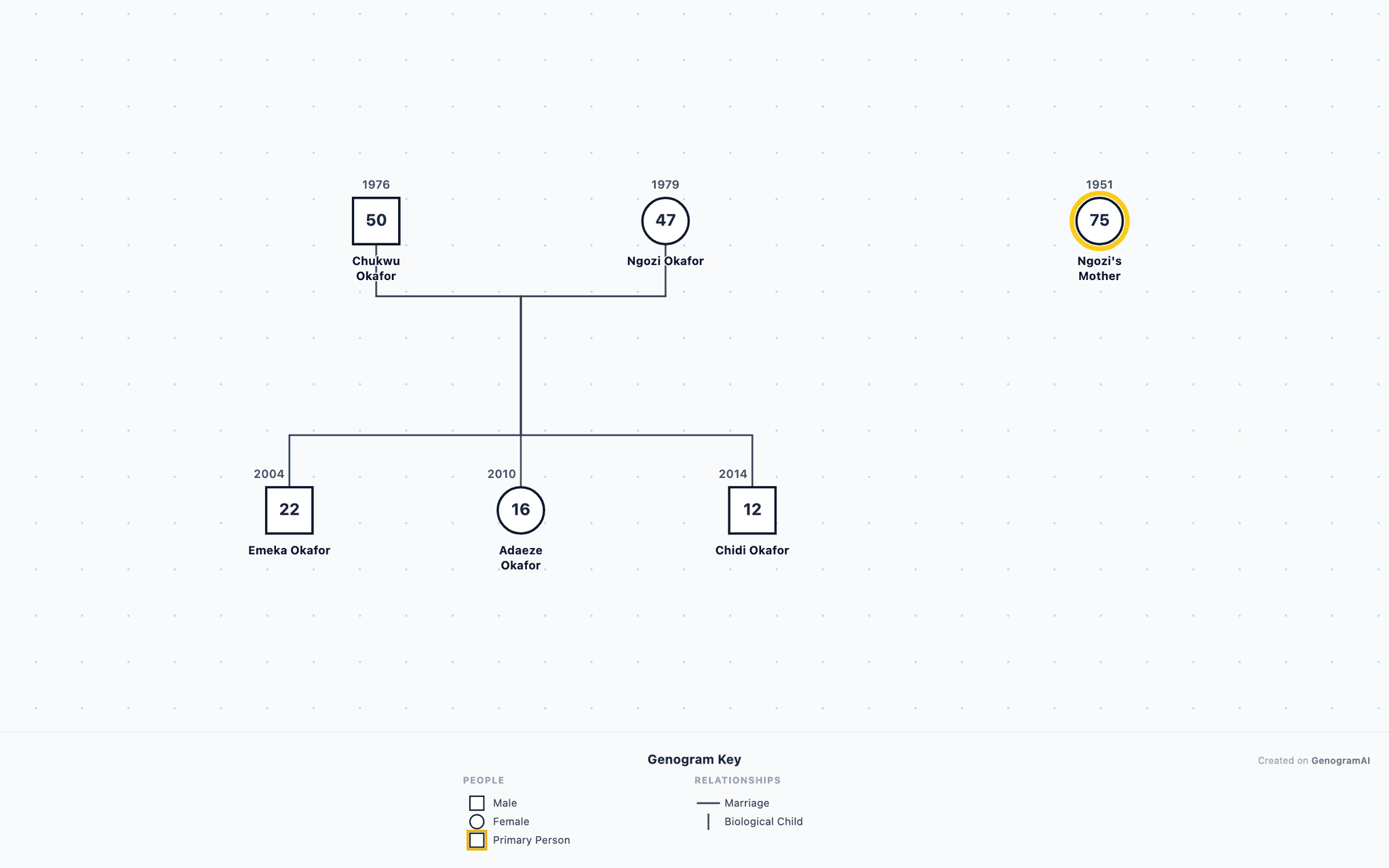
Okafor Family Genogram
Adaeze Okafor, 16, is brought to therapy by her parents, Chukwu (50) and Ngozi (47), for "defiant behavior.
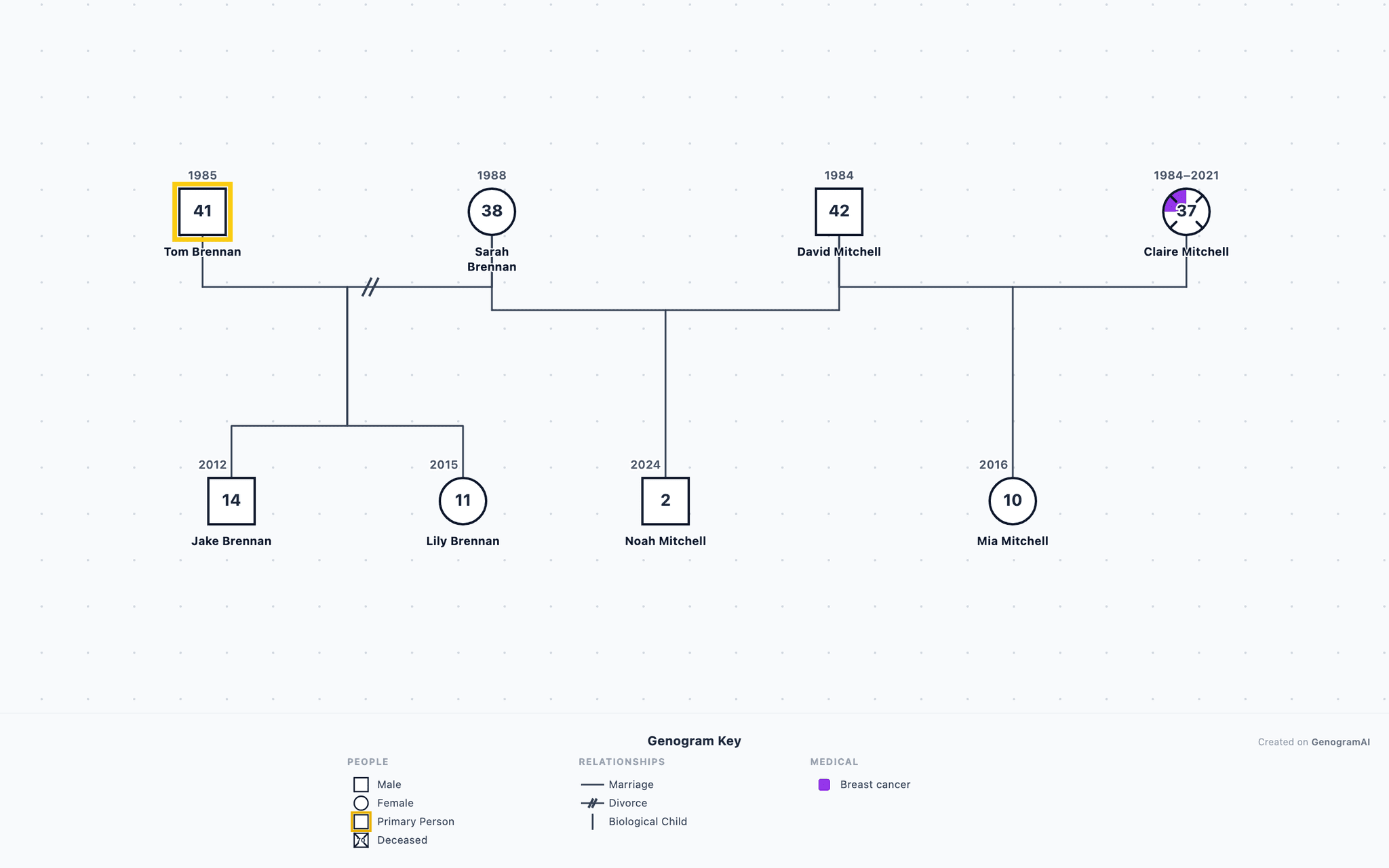
Brennan-Mitchell Family Genogram
Sarah Brennan (38) and David Mitchell (42) present for couple therapy, reporting constant conflict about parenting. They have been married for three years.
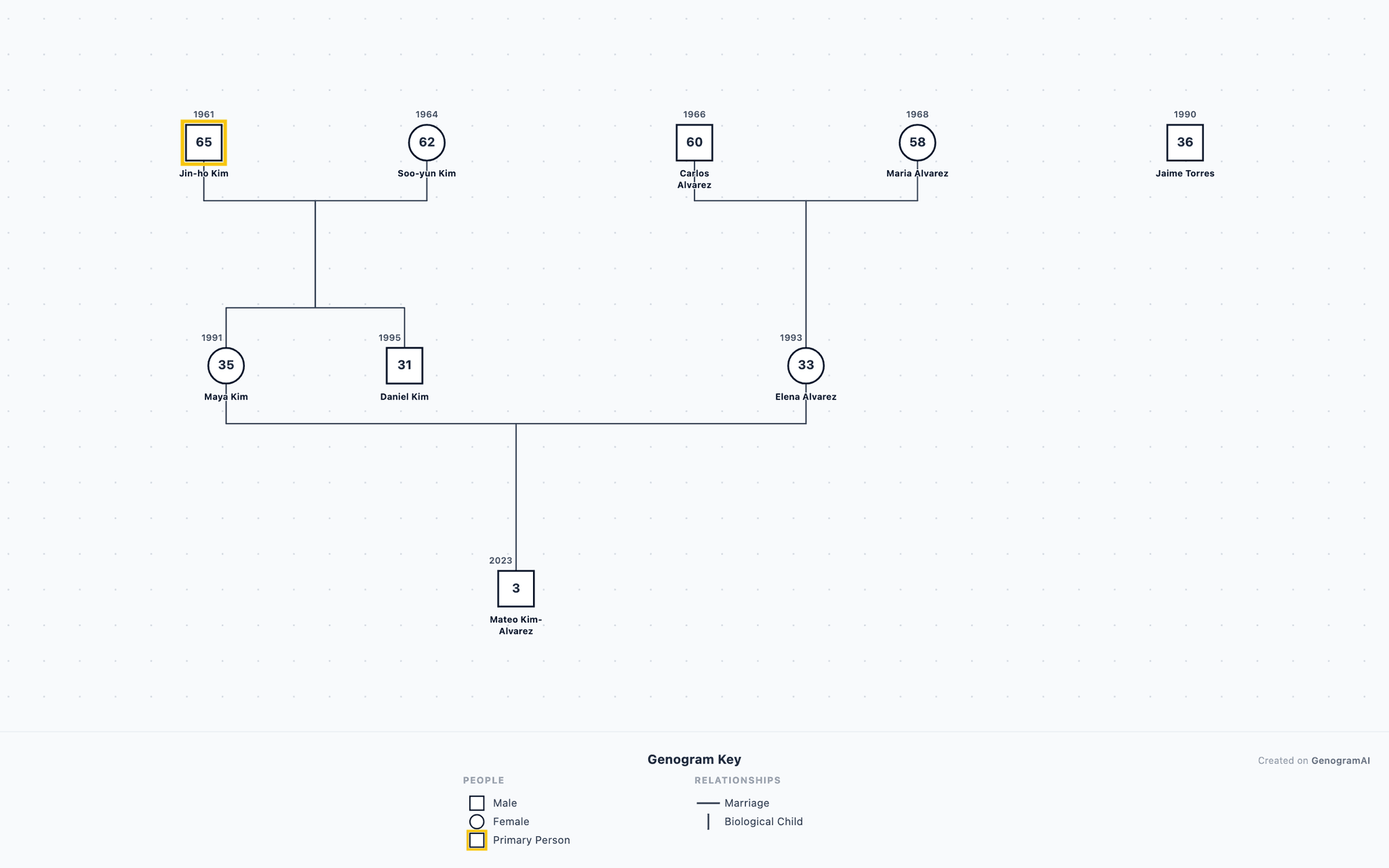
Kim-Alvarez Family Genogram
Maya Kim (35) and Elena Alvarez (33) present for family therapy.
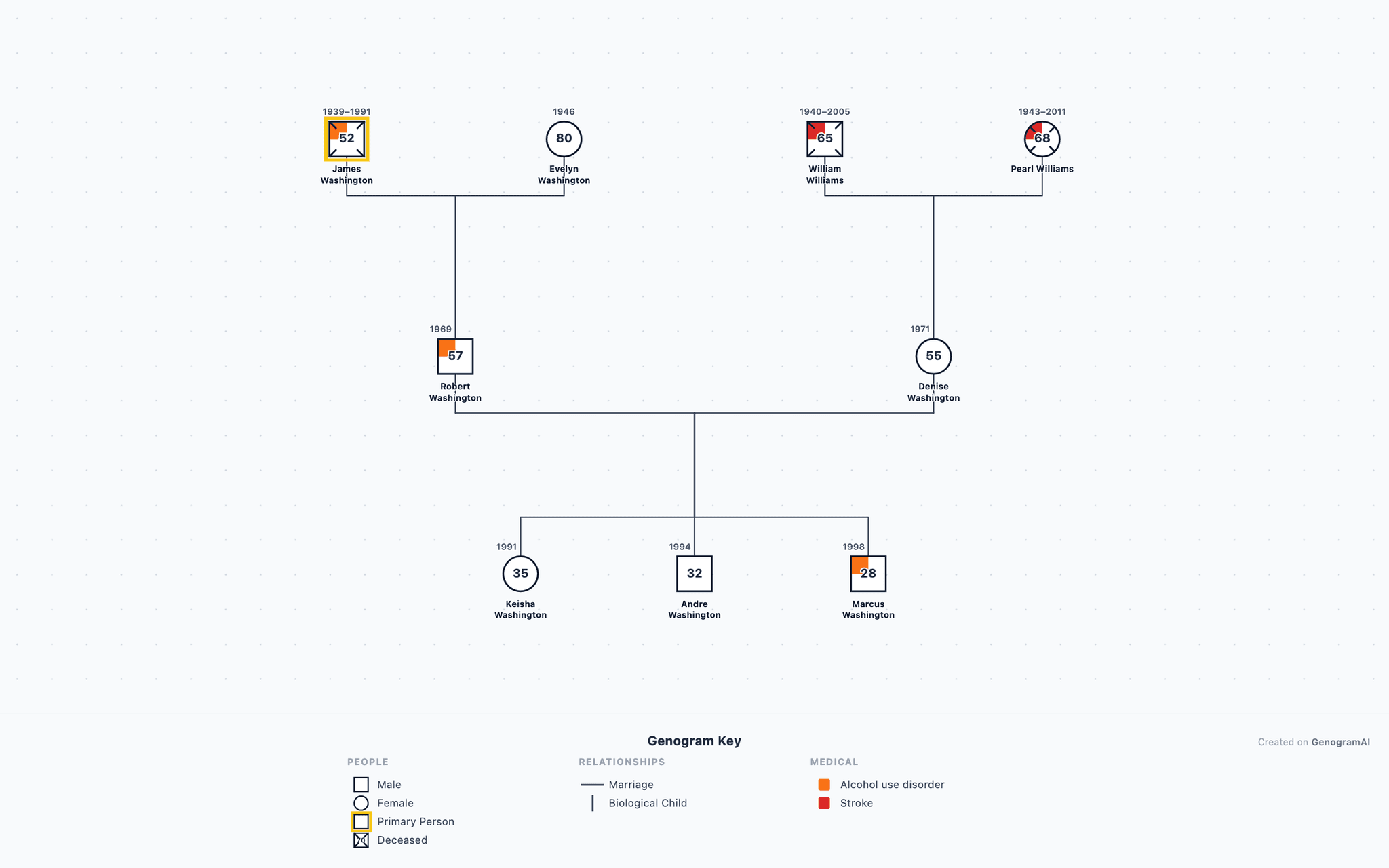
Washington Family Genogram
Marcus Washington (28) enters treatment for alcohol use disorder after a DUI arrest. He is court-mandated to treatment. Marcus lives alone.
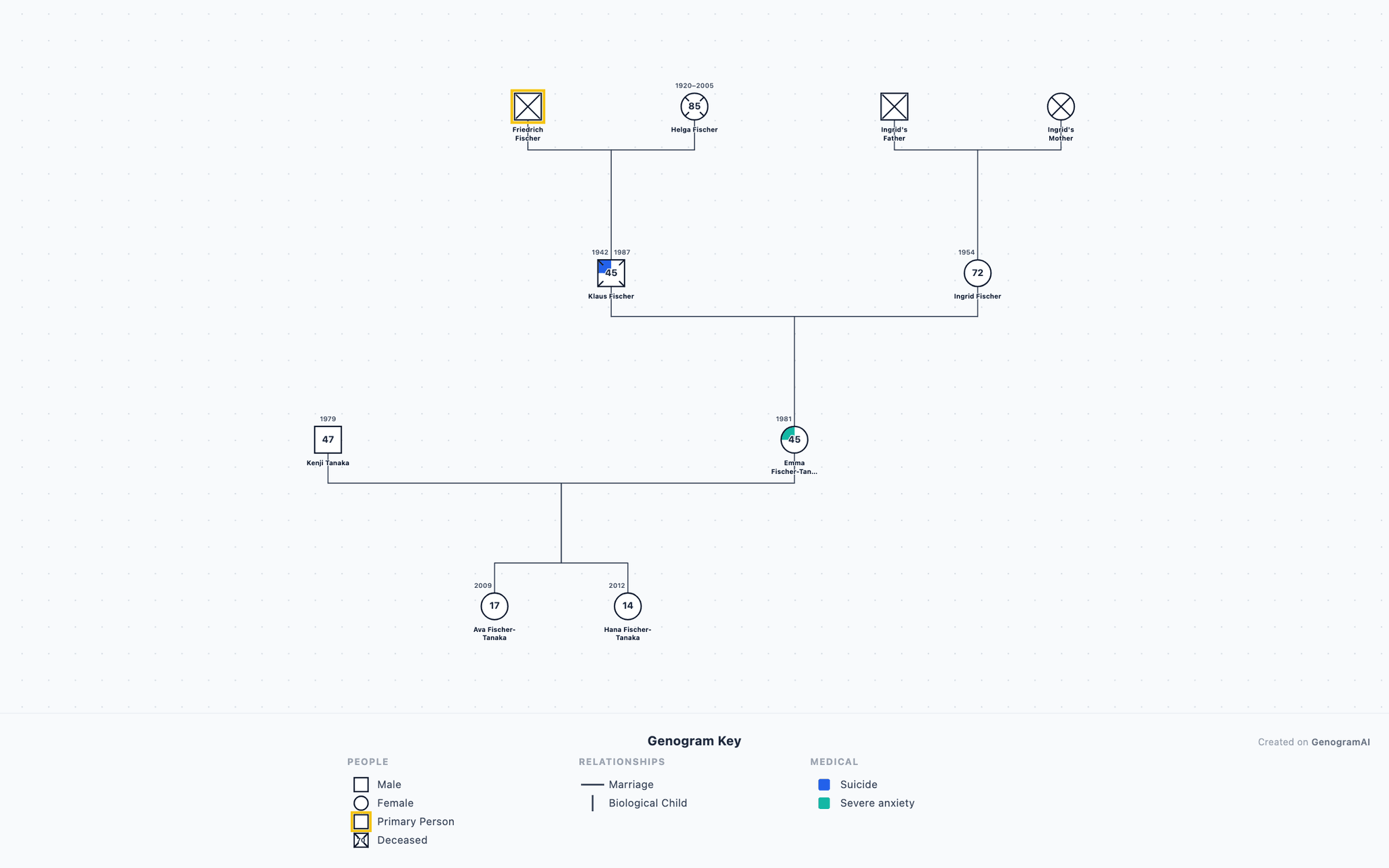
Fischer-Tanaka Family Genogram
Emma Fischer-Tanaka (45) presents with severe anxiety, insomnia, and a sense of dread that began abruptly six months ago. She cannot identify a trigger.
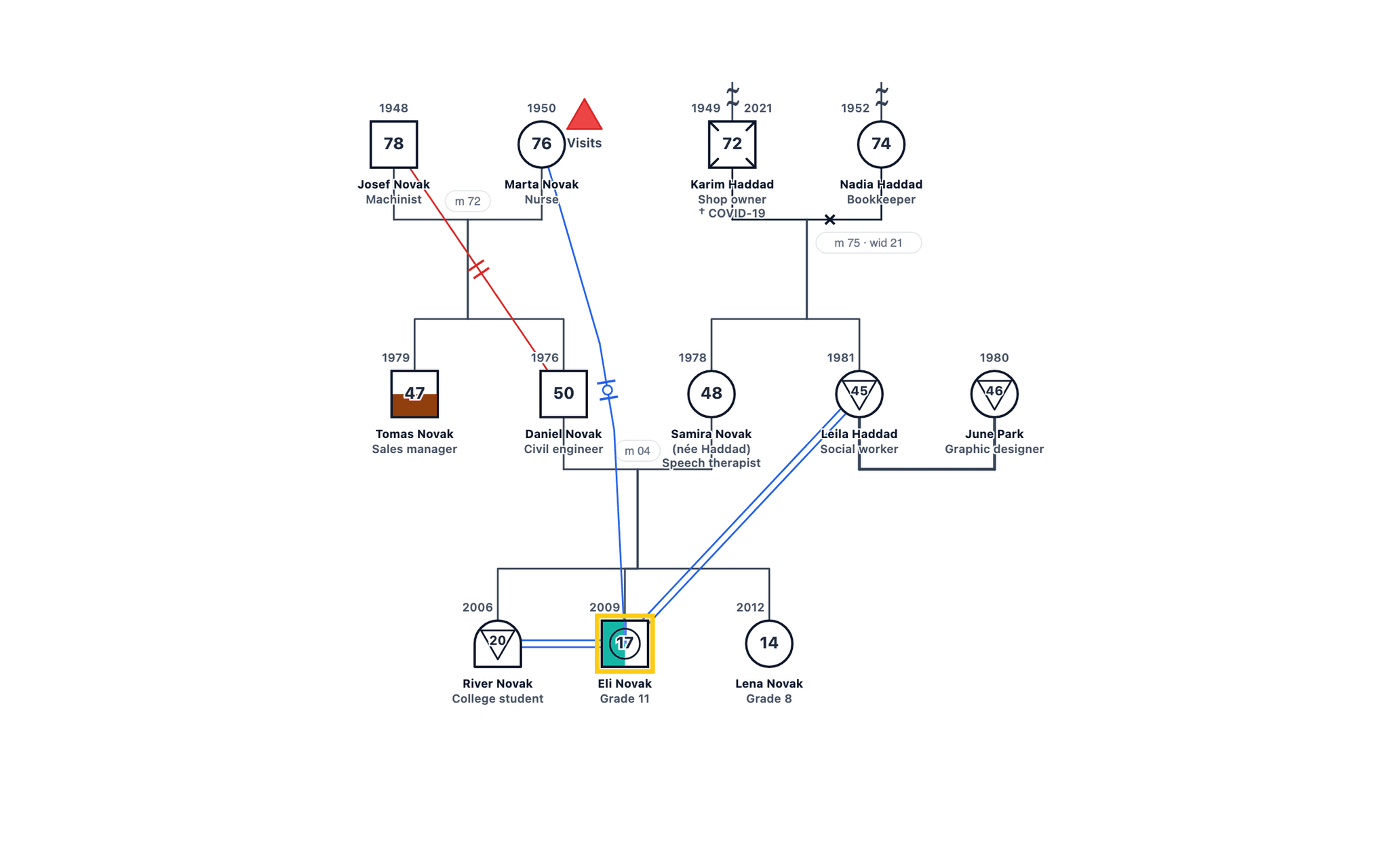
Gender Identity in the Family: Transgender and Nonbinary Members
Clinical genogram with a transgender teenager and a nonbinary sibling: gender identity symbols, orientation, cutoff, repair and support across generations.
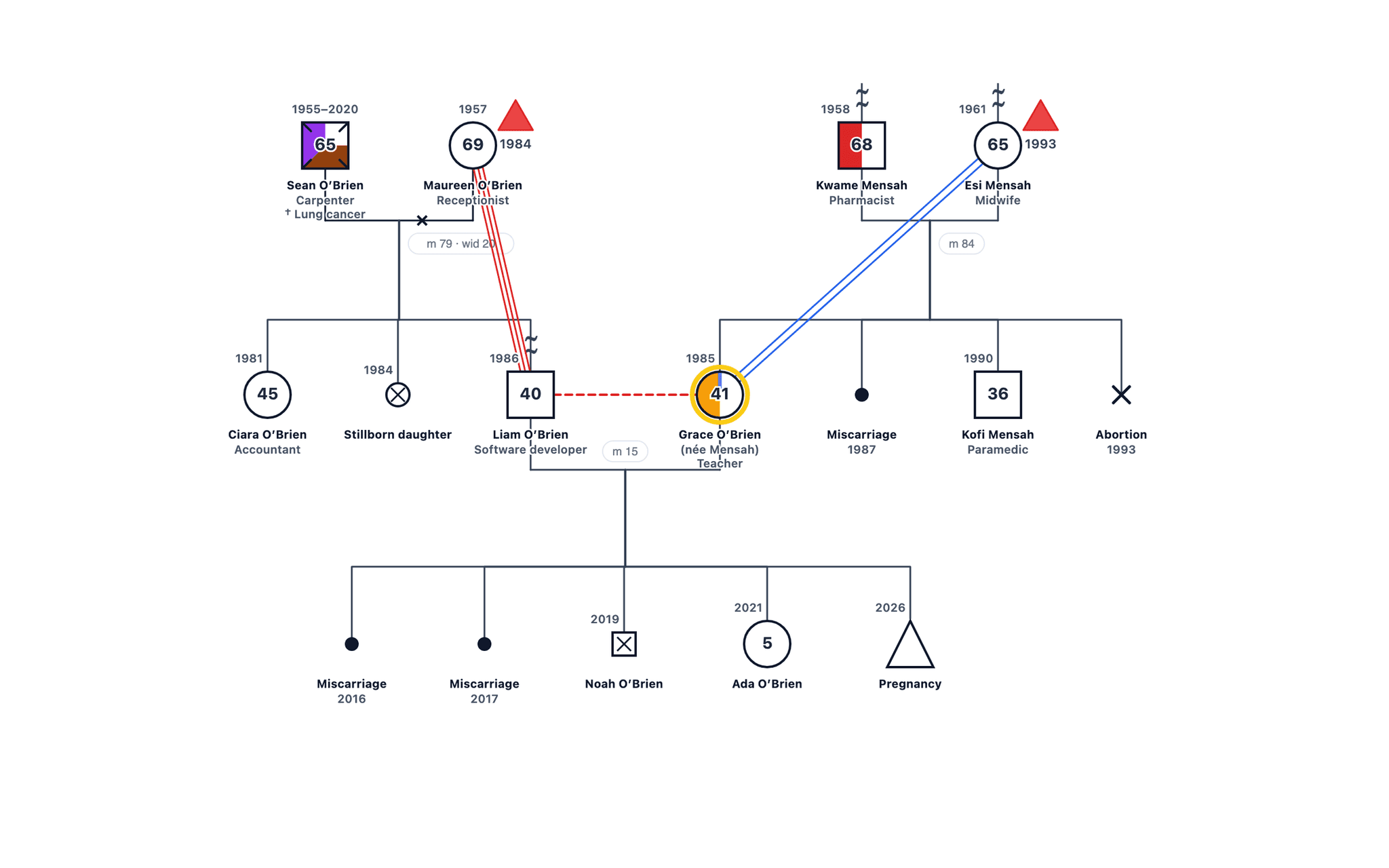
Pregnancy Loss and Infertility Across Generations
Genogram with miscarriage, stillbirth, abortion and pregnancy symbols in birth order, plus IVF and unspoken losses in the previous generation.
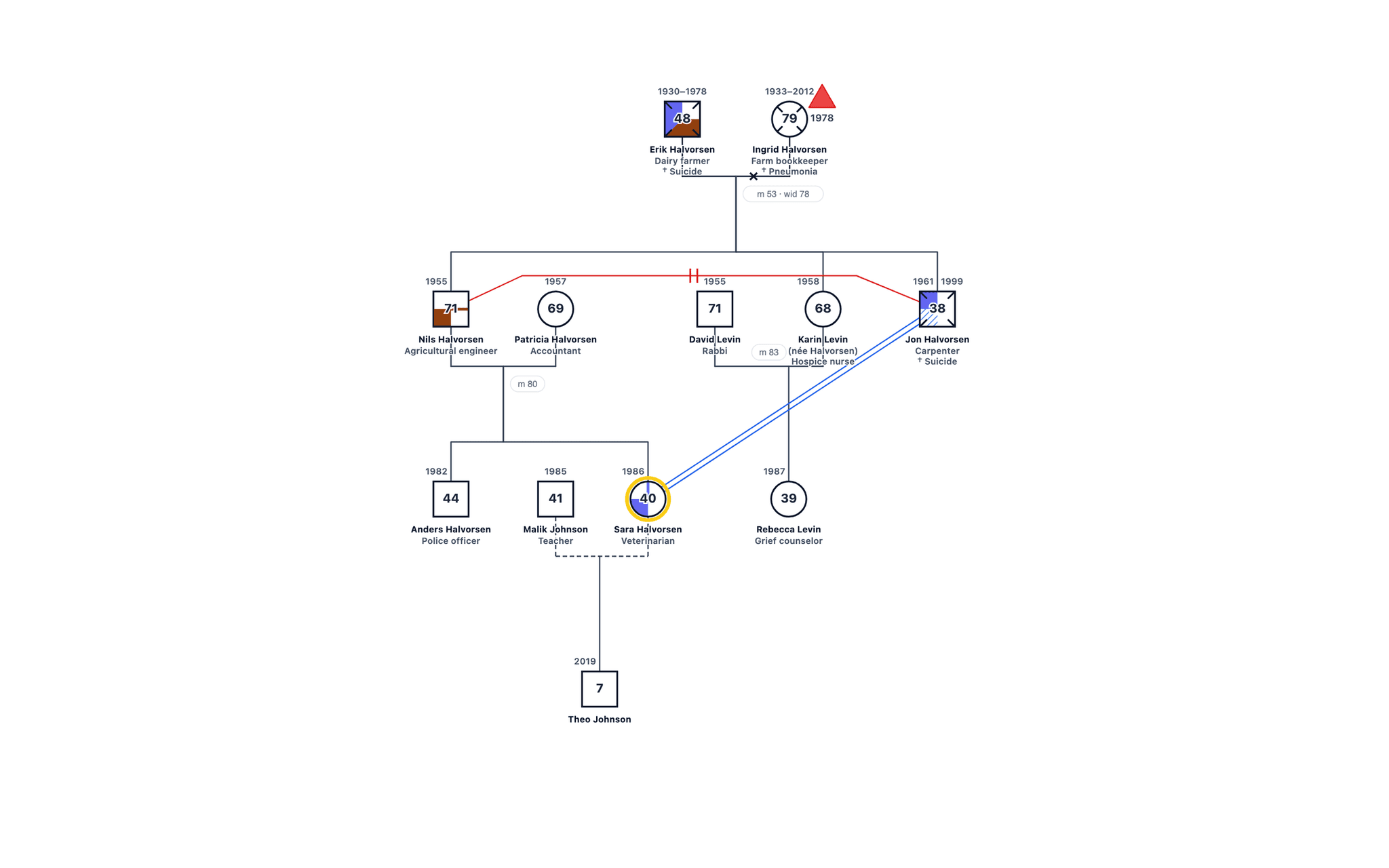
Suicide Loss and Anniversary Reactions
Clinical genogram of suicide loss across generations: death dates, a family secret, depression and alcohol patterns and an anniversary reaction.
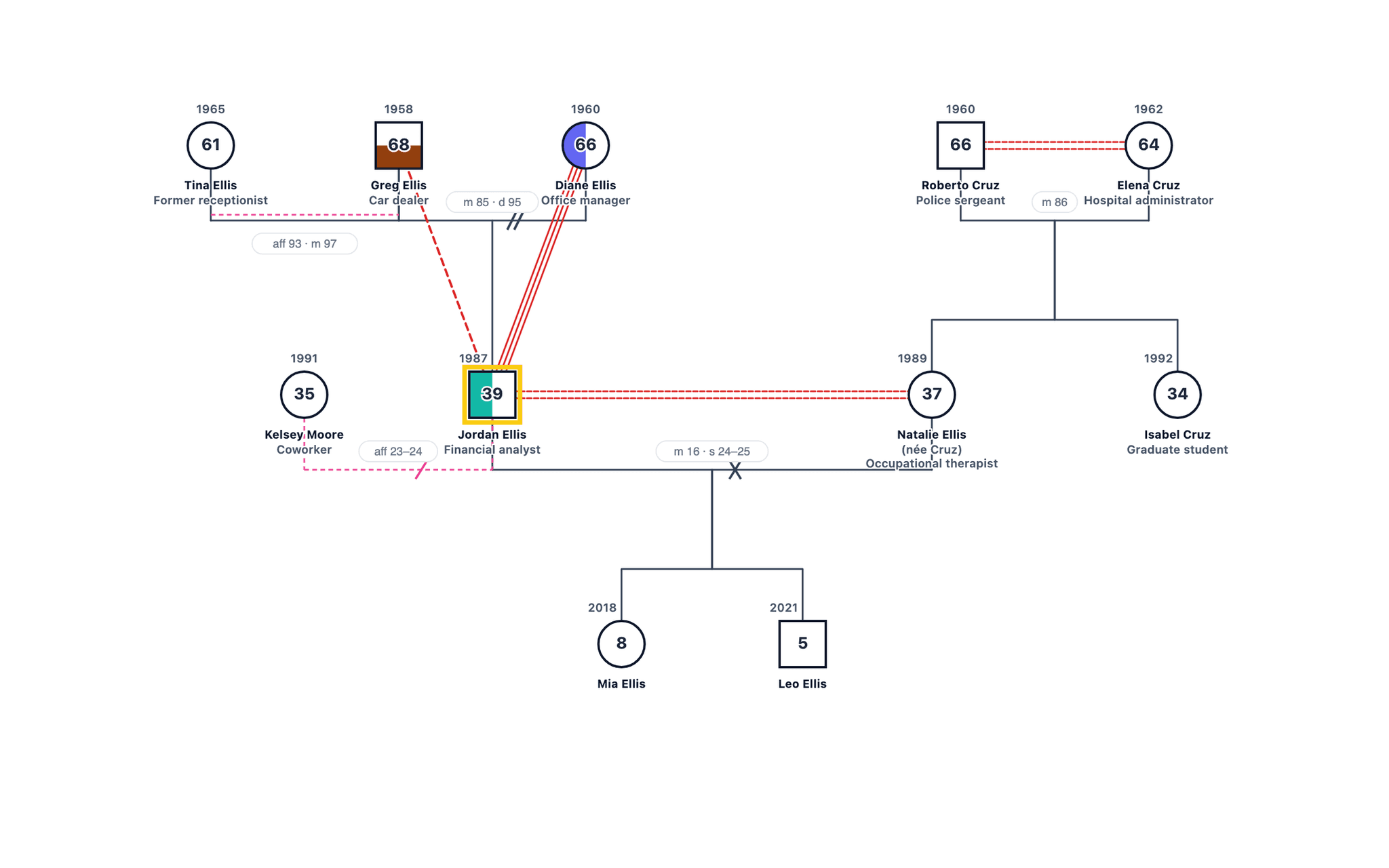
Couples Therapy: Affair, Separation and Two Families of Origin
Couples genogram with an affair, separation and reconciliation, both families of origin, a repeated affair pattern and a parent-child triangle.
Fictional Case Studies for Clinical Training
These composite family cases are designed for clinical training without using real client data. The Okafor family demonstrates African American multigenerational dynamics. The Kim-Alvarez family shows cross-cultural blended family challenges. The Fischer-Tanaka family illustrates military-to-civilian transition stress. Use these in classroom role-plays, supervision exercises, or case conceptualization practice.
Fictional case studies solve one of the biggest challenges in clinical education: access to realistic, complex family scenarios without ethical risk. Each case includes enough detail for students to practice intake interviewing, hypothesis generation, and treatment planning. Supervisors can also use these genograms as calibration tools, comparing how different trainees interpret the same family system.
Who uses these examples
- Clinical supervisors running case conceptualization exercises with trainees
- Marriage and family therapy programs needing teaching materials without real client data
- Social work faculty teaching multicultural family assessment
- Counseling students practicing intake interviews and treatment planning
Browse all 184 examples in the genogram examples gallery. Examples based on public figures use publicly available information; they are educational illustrations, not clinical documents.