12 genogram examples
Medical & Hereditary Genogram Examples
Quick answer
All 12 medical & hereditary examples
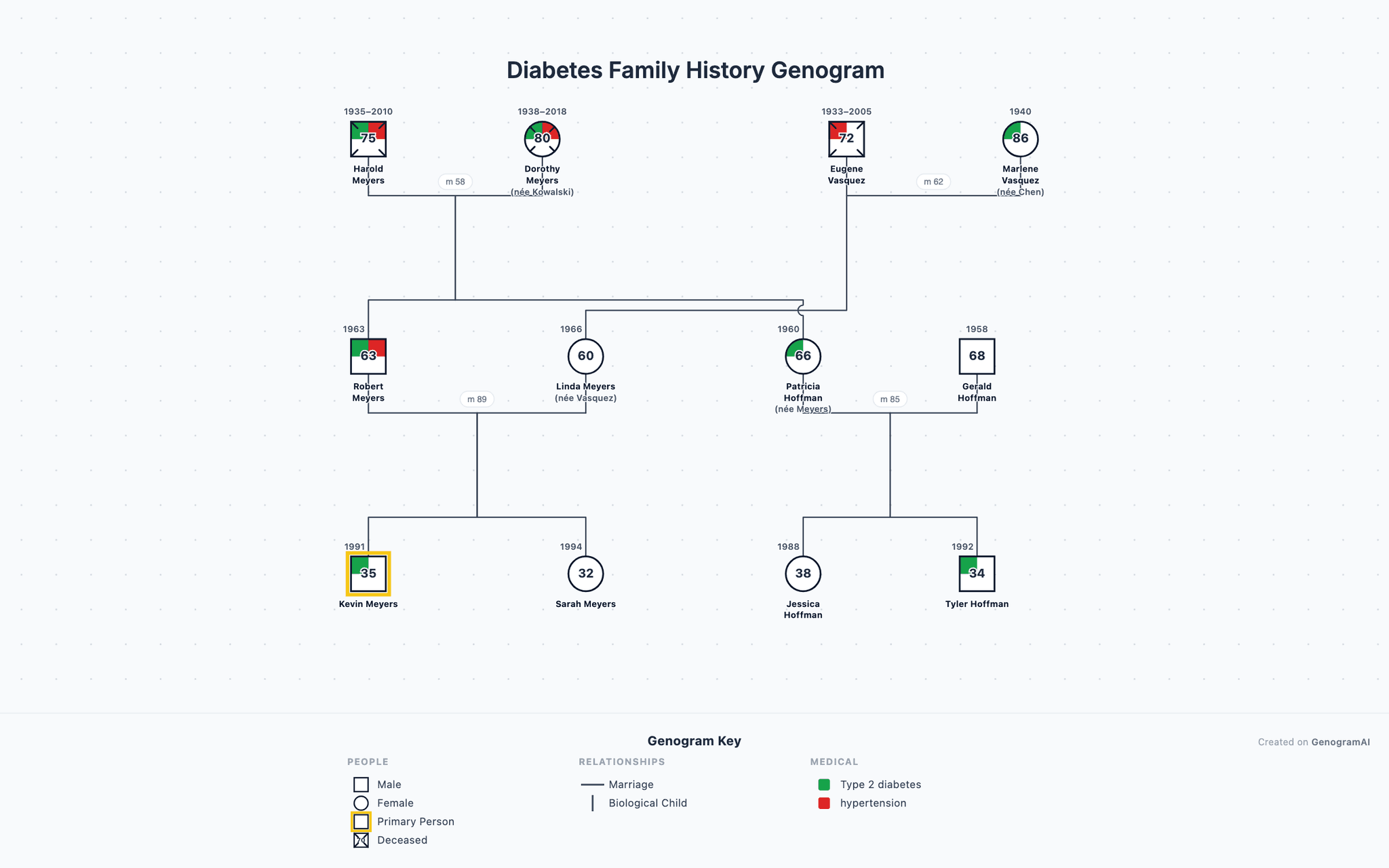
Diabetes Family History Genogram
A three-generation genogram illustrating the clustering of Type 2 diabetes within a family, including comorbid cardiovascular conditions.
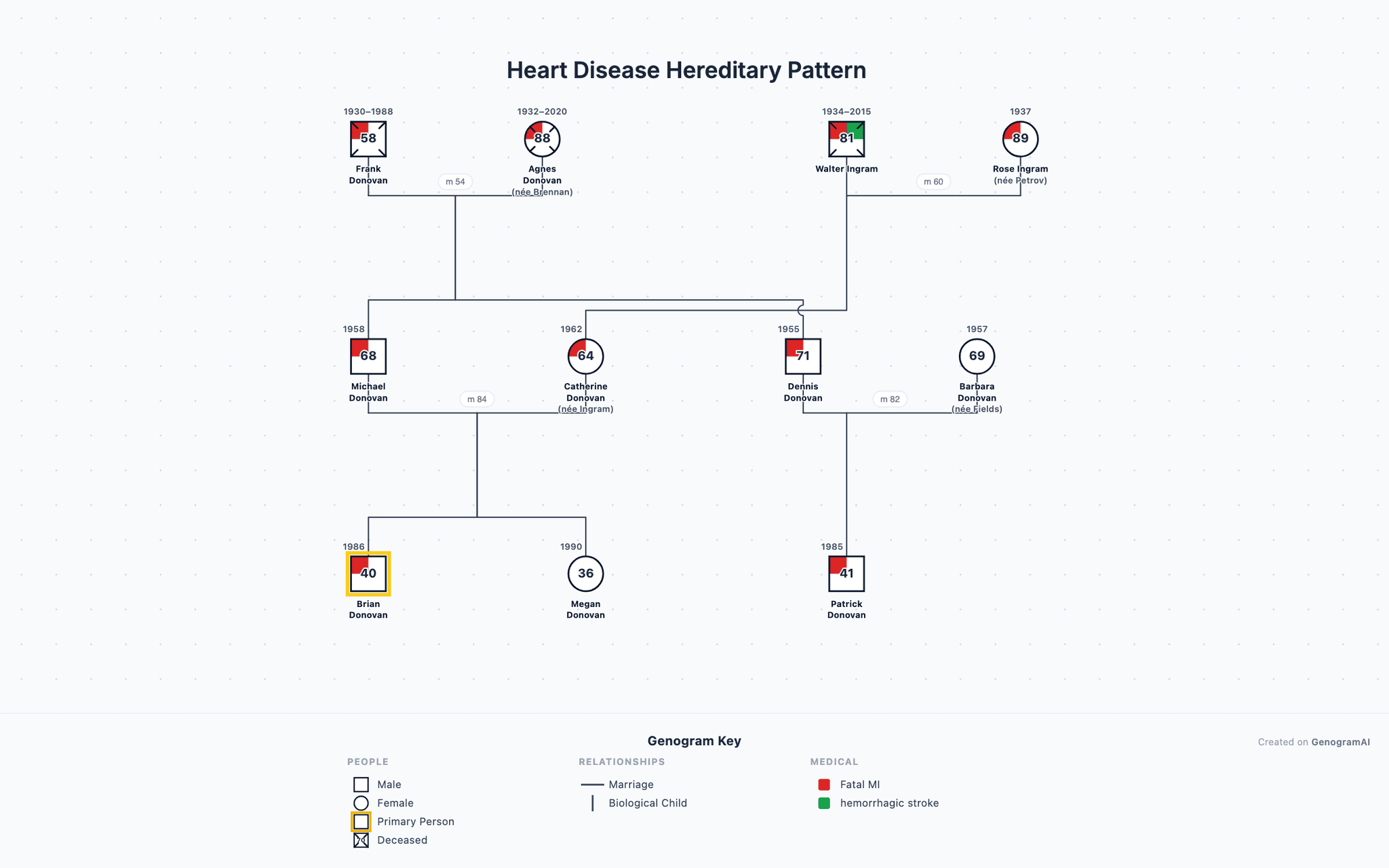
Heart Disease Hereditary Pattern
A three-generation genogram demonstrating the hereditary pattern of coronary artery disease and cardiovascular risk factors.
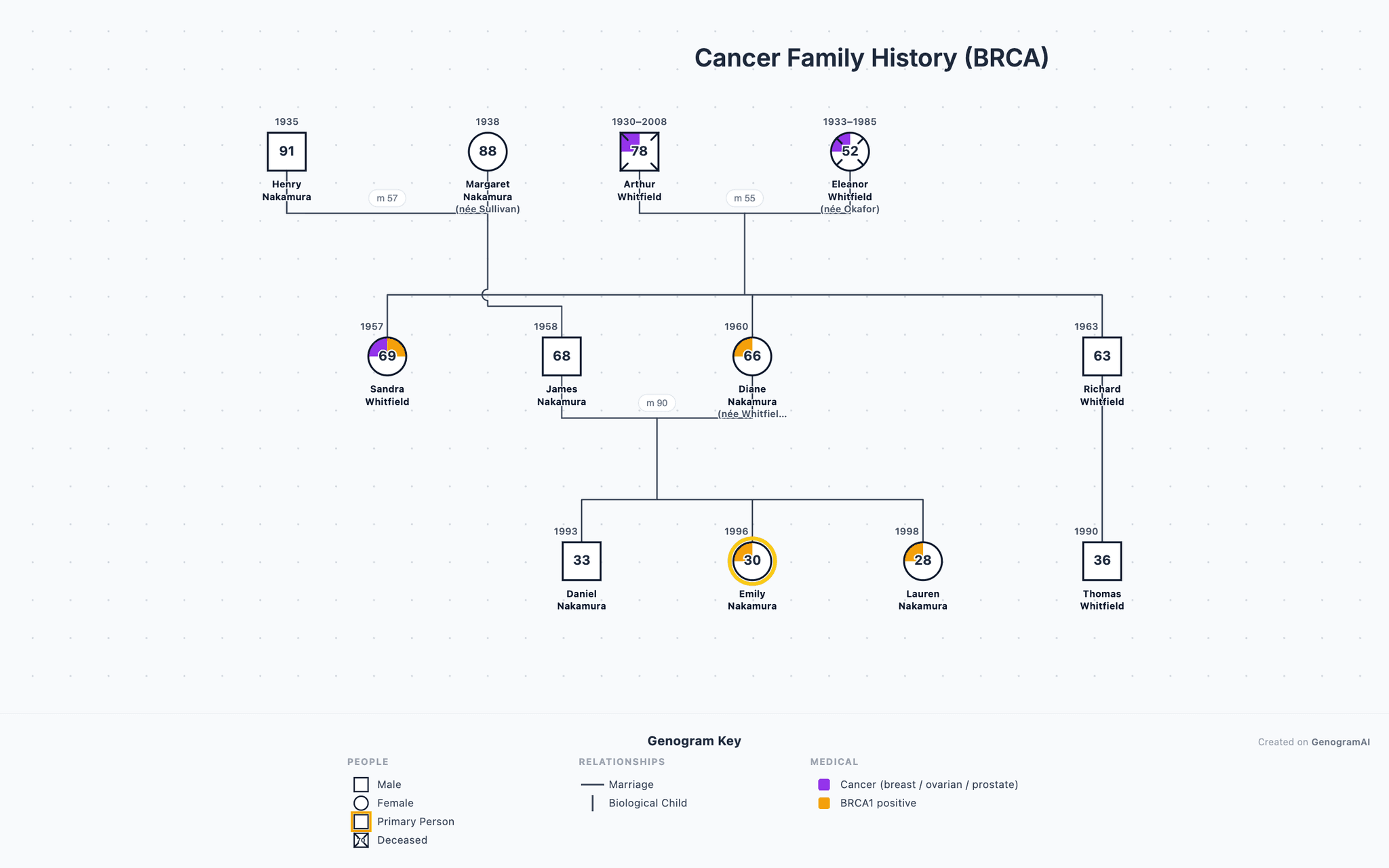
Cancer Family History (BRCA)
A three-generation genogram tracing a BRCA1 mutation through a maternal lineage. The maternal grandmother was diagnosed with breast cancer at 45 and died at 52.
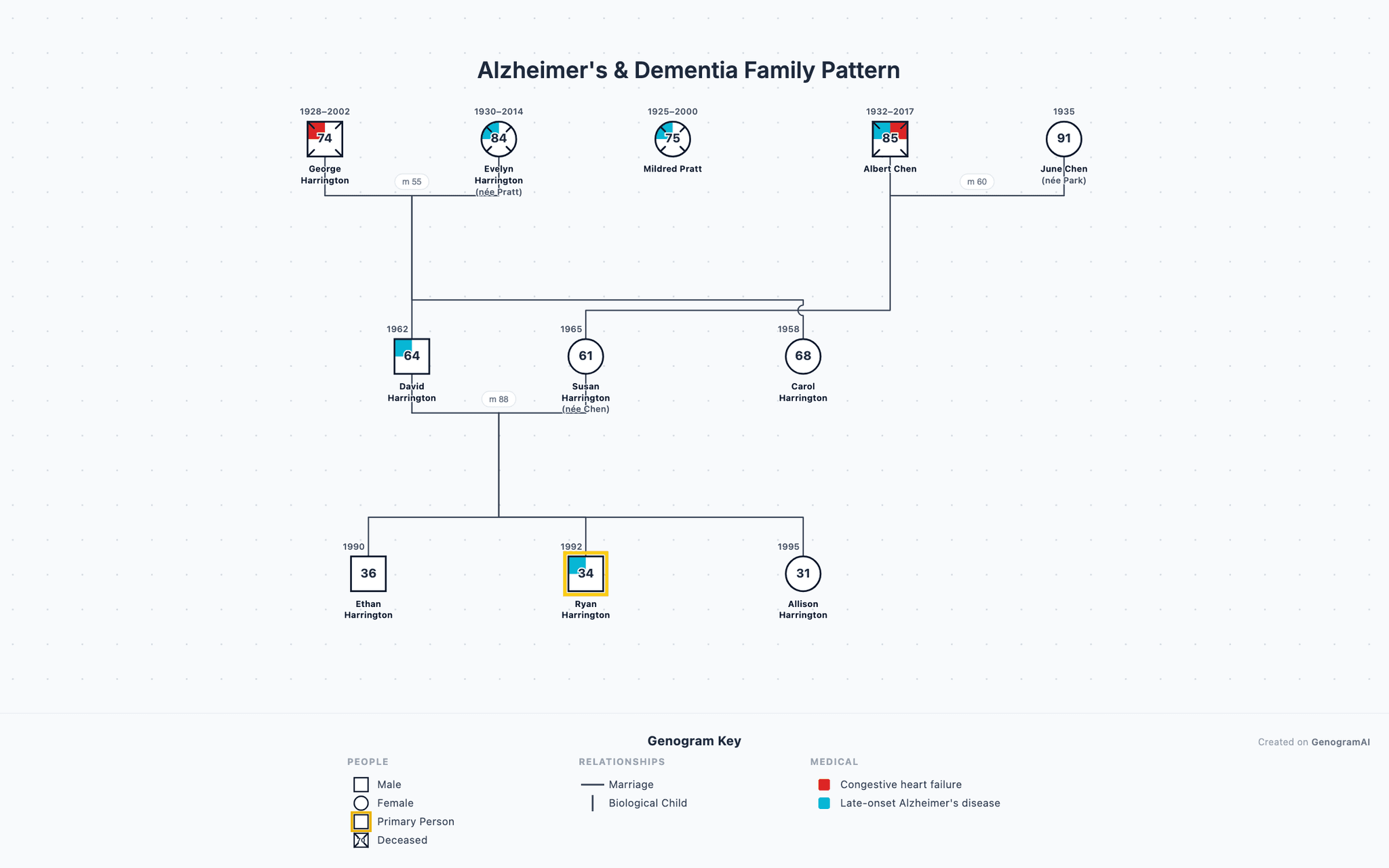
Alzheimer's & Dementia Family Pattern
A three-generation genogram examining the familial clustering of Alzheimer's disease and other dementias.
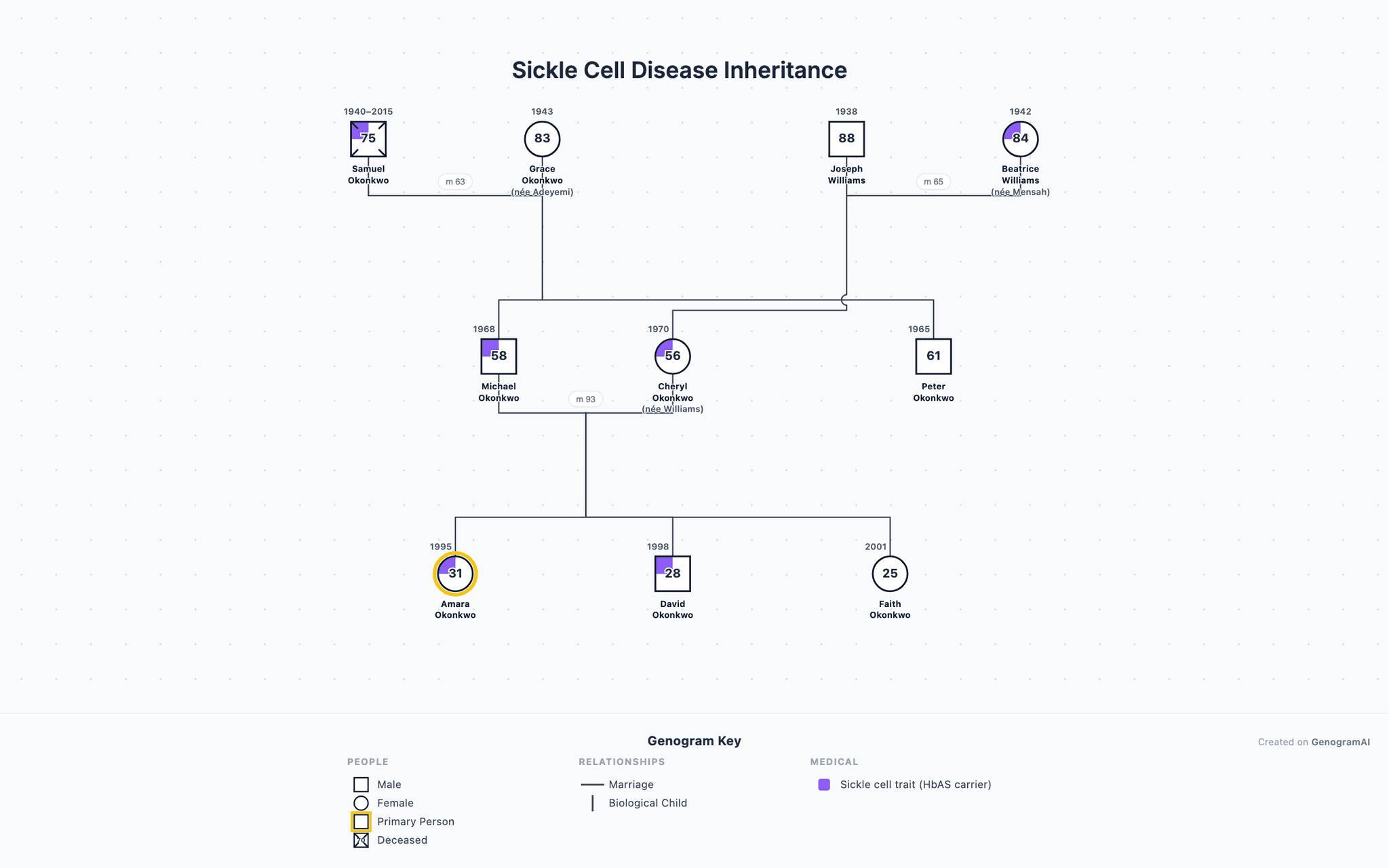
Sickle Cell Disease Inheritance
A three-generation genogram illustrating the autosomal recessive inheritance pattern of sickle cell disease.
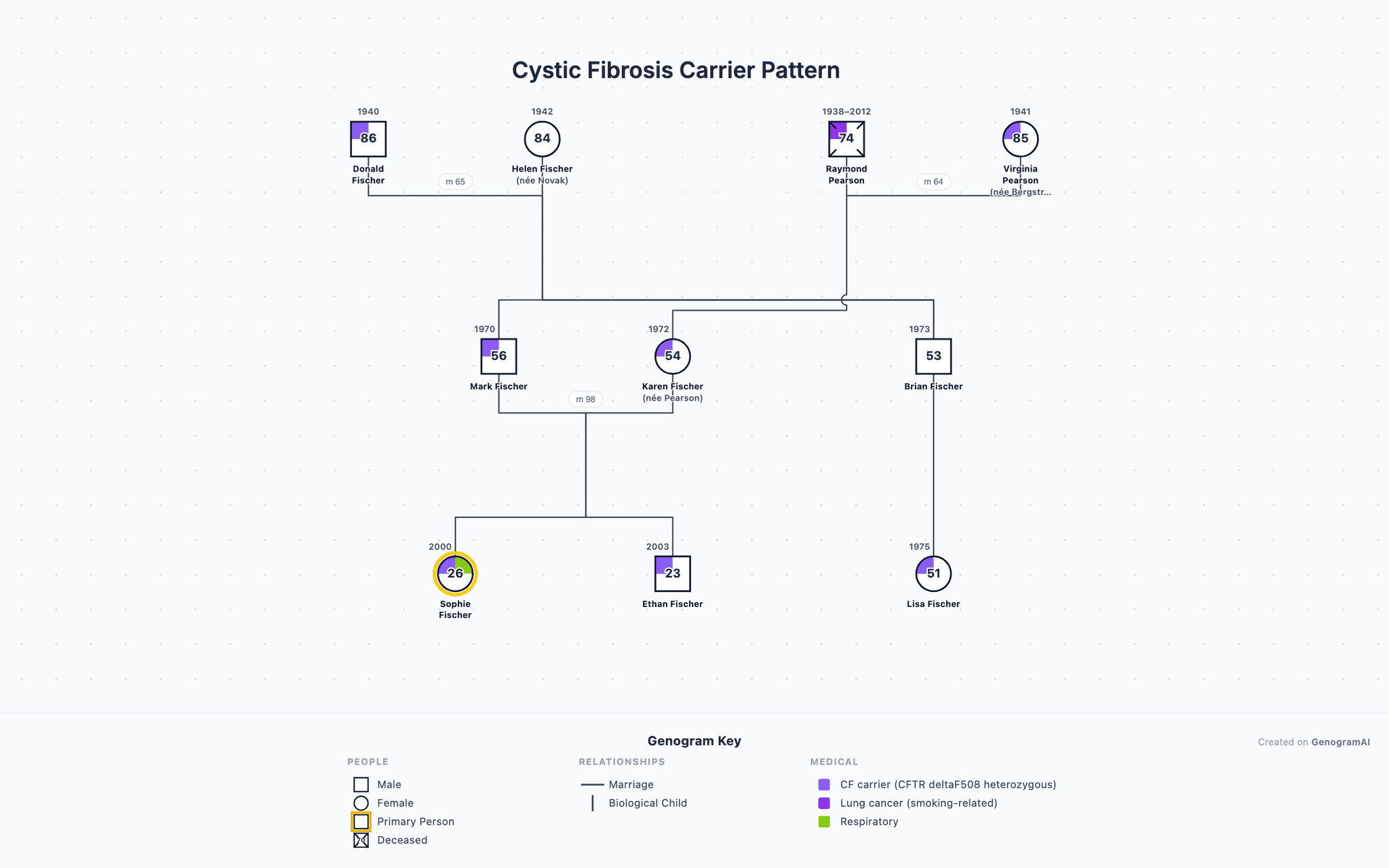
Cystic Fibrosis Carrier Pattern
A three-generation genogram depicting the autosomal recessive inheritance pattern of cystic fibrosis. Both parents were unknowing carriers of CFTR mutations.
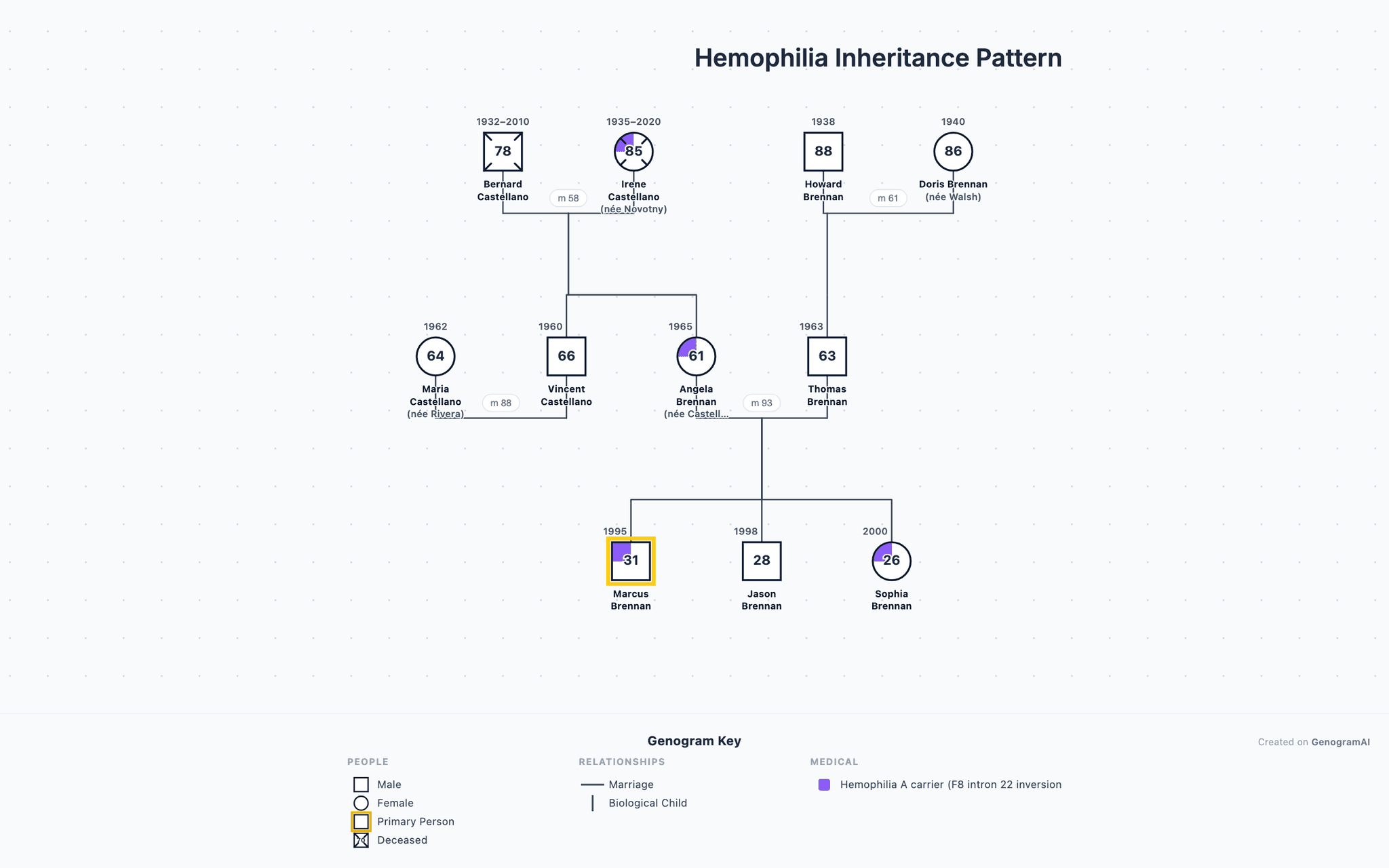
Hemophilia Inheritance Pattern
A three-generation genogram illustrating the X-linked recessive inheritance pattern of hemophilia A. The maternal grandmother was an obligate carrier.
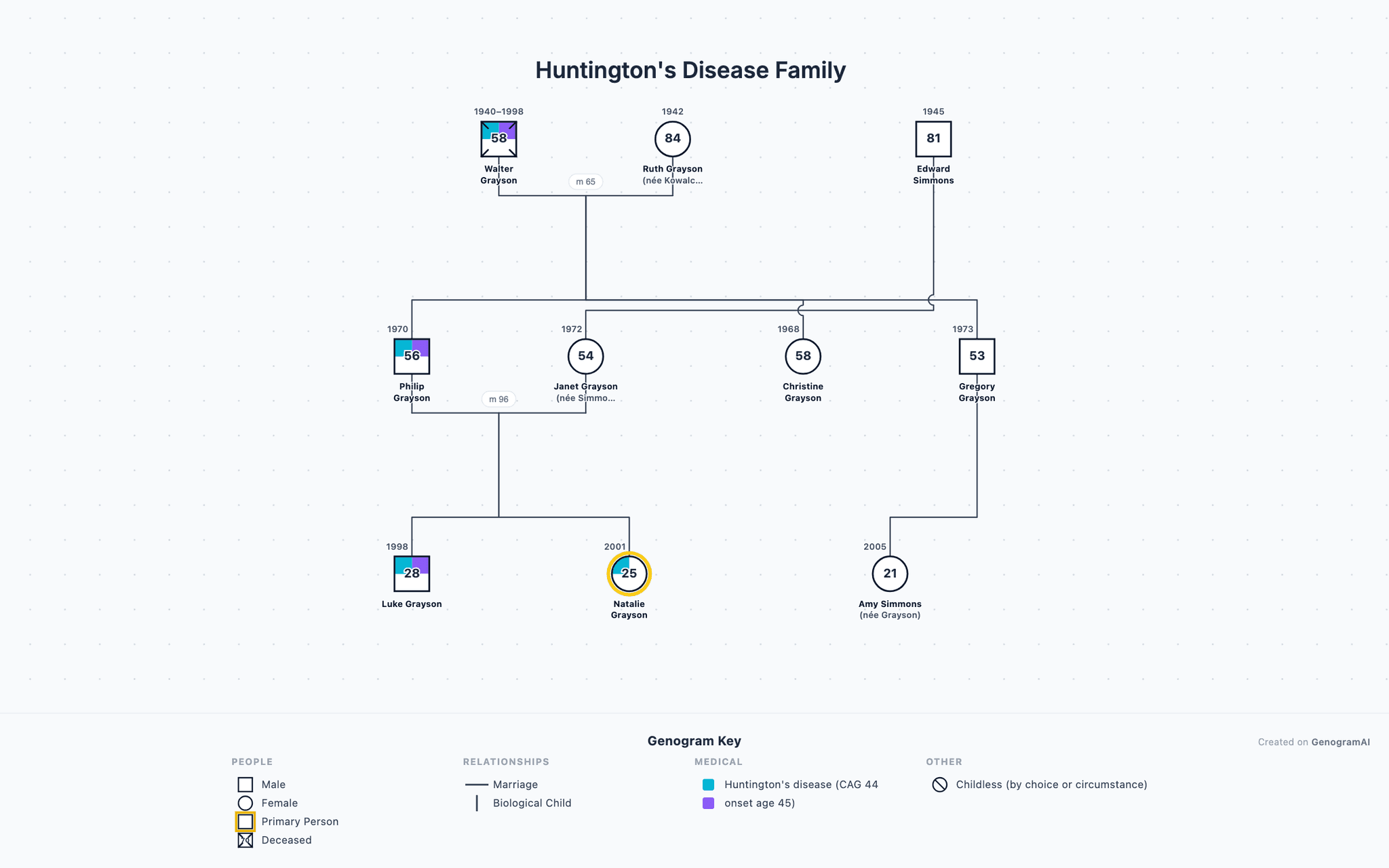
Huntington's Disease Family
A three-generation genogram illustrating the autosomal dominant inheritance pattern of Huntington's disease. The grandfather was diagnosed at 45 and died at 58.
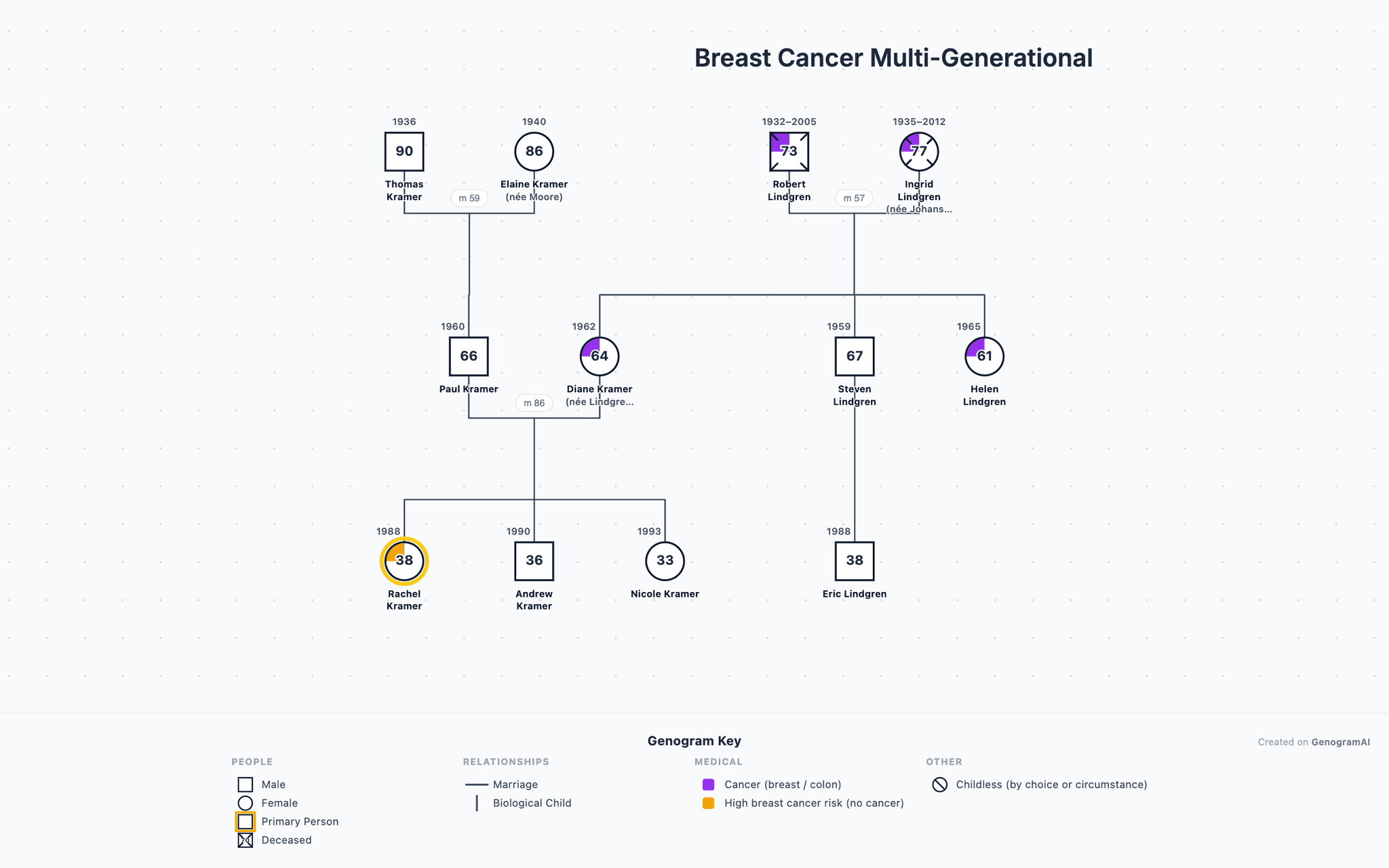
Breast Cancer Multi-Generational
A three-generation genogram depicting non-BRCA familial breast cancer clustering.
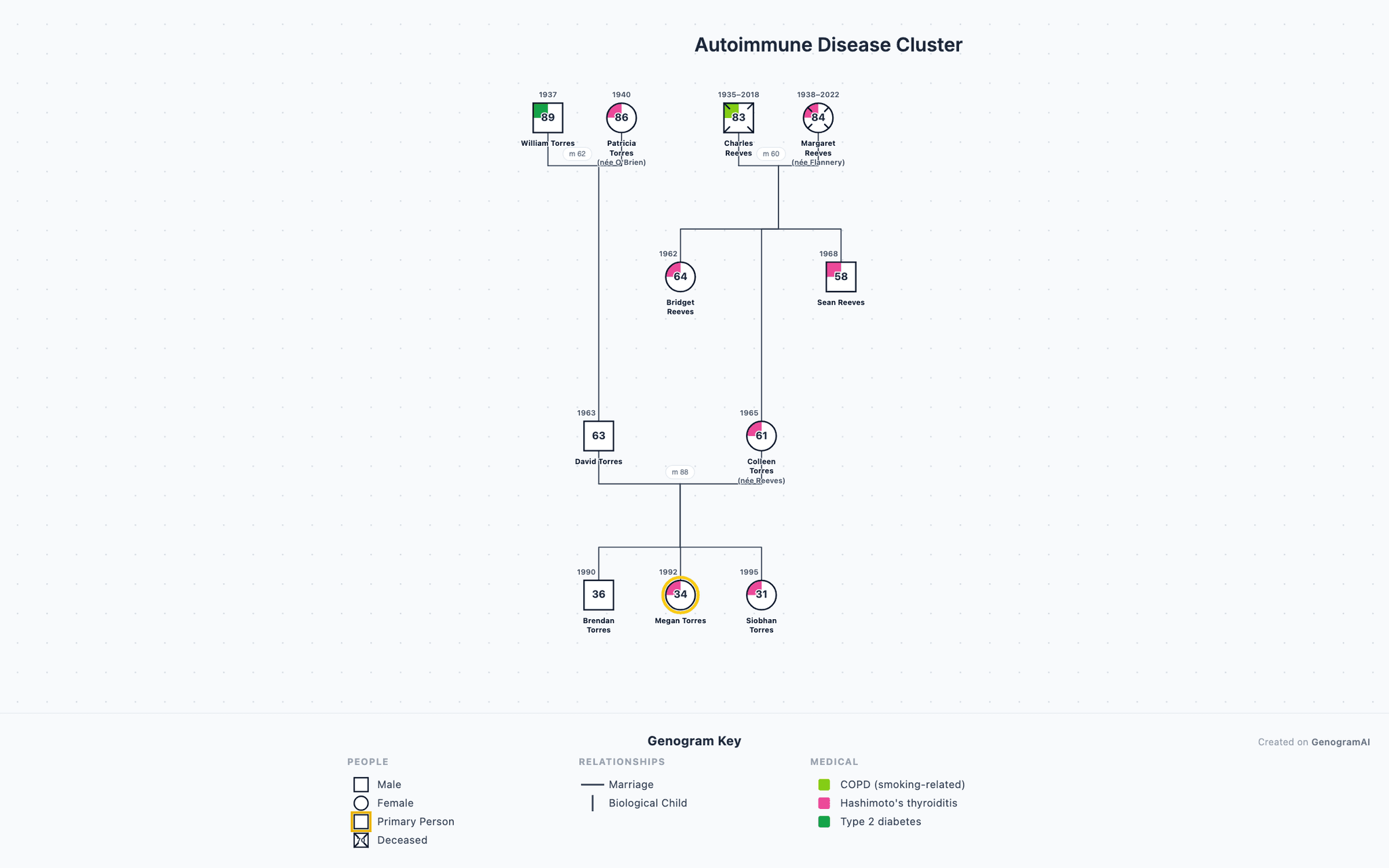
Autoimmune Disease Cluster
A three-generation genogram demonstrating the familial clustering of multiple autoimmune conditions.
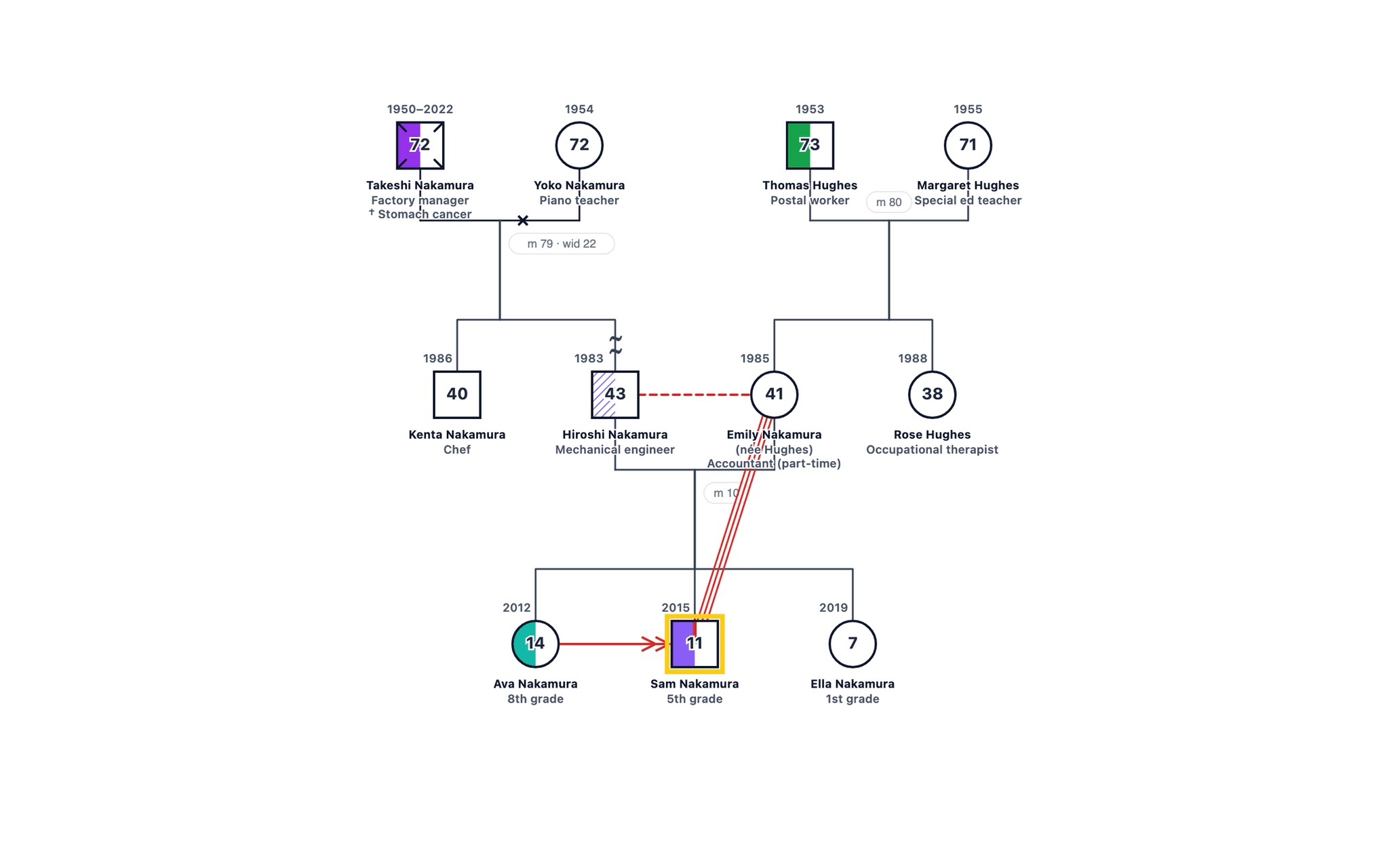
Child with Down Syndrome: Family Adaptation
Genogram of a family raising a child with Down syndrome: genetic and heart conditions, sibling caretaking, parent stress and grandparent support.
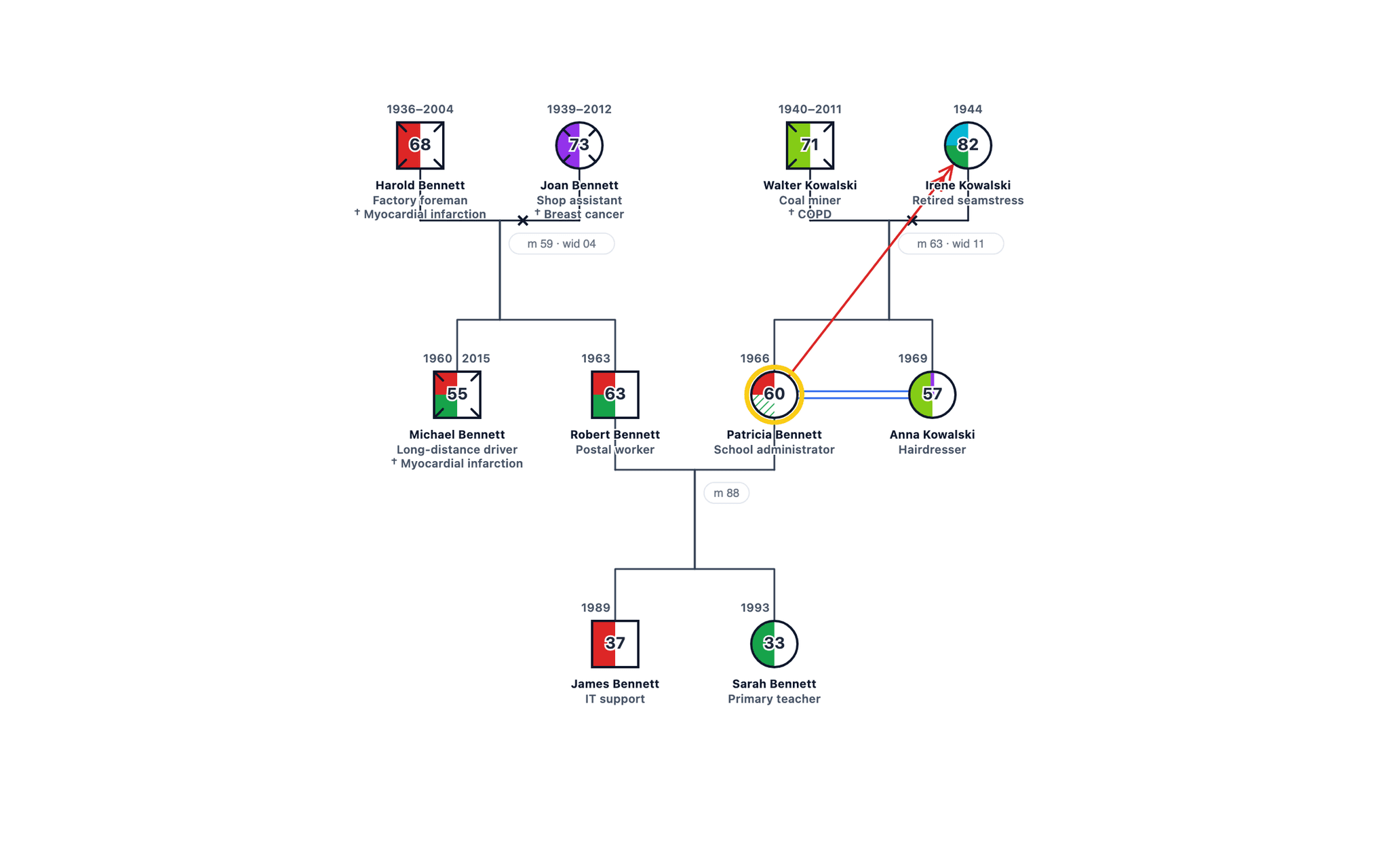
Nursing Genogram Example: Family Health Assessment
Three-generation nursing genogram: type 2 diabetes, hypertension, MI, breast cancer and COPD, causes and ages of death and a caregiving line.
Understanding Hereditary Patterns Through Genograms
Medical genograms track hereditary conditions using the quadrant shading system, where each quarter of a symbol represents a different health condition affecting that individual. This visual shorthand allows clinicians to scan an entire pedigree and immediately spot clustering patterns that suggest genetic predisposition. The examples in this collection cover BRCA-related cancer risk across maternal and paternal lines, Type 2 diabetes inheritance patterns that interact with lifestyle factors, heart disease clustering that reveals both genetic and environmental contributors, and single-gene disorders like sickle cell trait and cystic fibrosis carrier status. For genetic counselors building pedigree charts before patient consultations, these diagrams provide reliable structural templates.
Family physicians conducting hereditary risk assessments will find these examples particularly valuable during annual wellness visits, where a three-generation medical genogram can surface risks that a standard health history questionnaire misses entirely. Oncologists use similar diagrams to determine whether a patient qualifies for genetic testing under NCCN guidelines. Each example in this collection annotates age of onset, specific diagnoses, and cause of death where applicable, giving you a complete picture of how to document medical family history in a format that is both clinically useful and easy to update as new information emerges over time.
Who uses these examples
- Genetic counselors building pedigree charts and assessing hereditary risk before patient consultations
- Family physicians conducting three-generation medical history screenings during wellness visits
- Nursing and medical students learning to document hereditary conditions using standard notation
- Researchers in epidemiology and population genetics studying familial disease clustering
Browse all 184 examples in the genogram examples gallery. Examples based on public figures use publicly available information; they are educational illustrations, not clinical documents.