Community genogram · Shared by a GenogramAI user
Dana’s family genome Genogram
The Dana’s family genome Genogram maps 19 people across four generations. It records 6 deceased members and health history including substance use, trauma and heart disease. Relationship lines show emotional distance and close but hostile ties, and the family structure includes step-parenting.
- 19 people
- 4 generations
- Substance use, trauma, heart disease
- Emotional distance, close but hostile ties, step-parenting
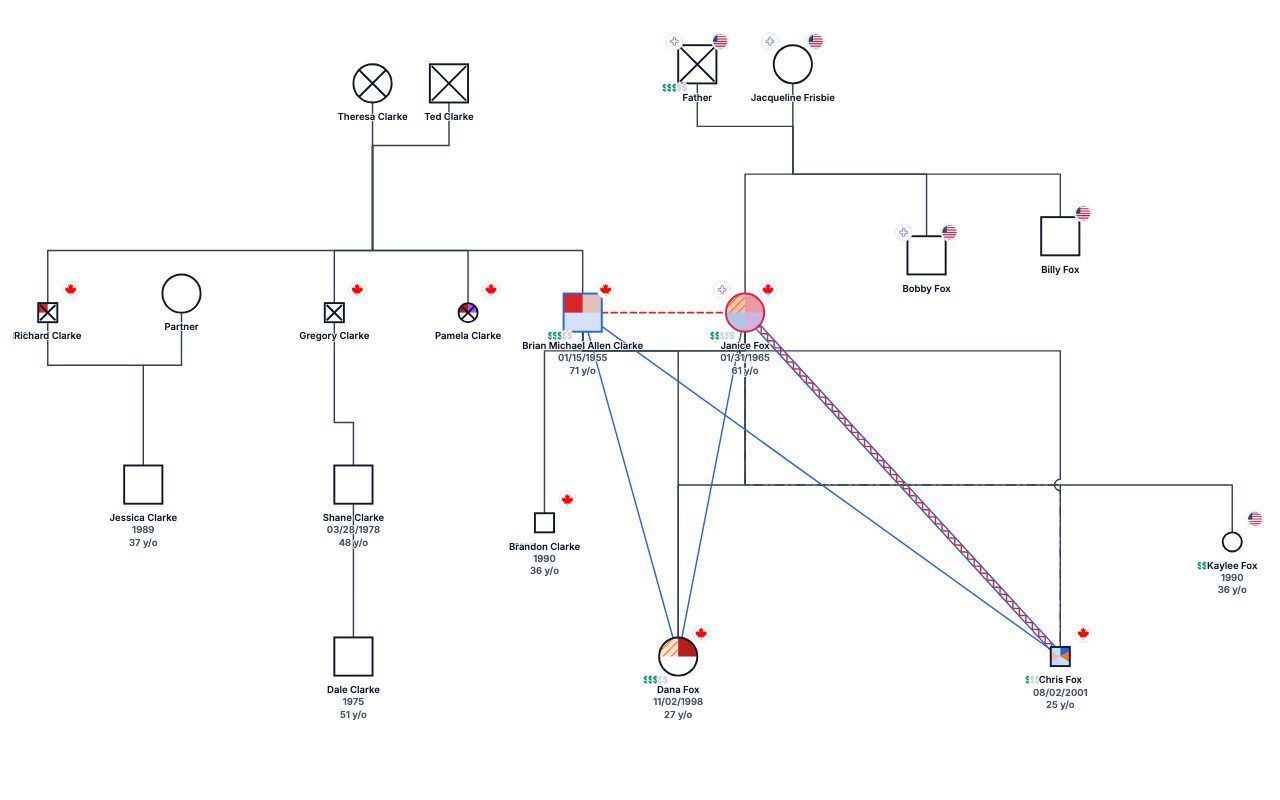
What this genogram shows
- 19 family members across four generations.
- 3 partnerships.
- 6 deceased people are marked with the deceased symbol.
- 6 people have recorded health conditions: substance use, trauma, heart disease, bipolar disorder and depression.
- Emotional relationship lines: emotional distance and close but hostile ties.
- Non-biological parent-child links: step-parenting.
Symbols used
- Marriage
- A horizontal line joining two partners.
- Deceased
- An X drawn through the person symbol.
- Medical condition
- Filled or shaded segments inside the symbol mark recorded health conditions.
- Conflict / hostility
- A red zigzag line for ongoing conflict or hostility.
See the full genogram symbols guide for every notation.
Generation by generation
Generation 1 (oldest)
The top row has 4 people (2 men and 2 women). 3 are marked deceased. The row contains 2 partnerships, all married. Between them, 3 sets of parents have 7 children in the next row; the largest sibling group has 4, and one has a single child.
Generation 2
The second row holds 7 people (5 men and 2 women). 3 of them have died, shown with an X. 1 person joined the family through a partnership, with no parents drawn above them. 1 couple is drawn here (married). 4 sets of parents account for 5 children one row down; the largest sibling group has 2, and three have a single child.
Generation 3
There are 4 people on the third row (3 men and 1 woman). 2 children descend from 2 sets of parents here, one child each.
Generation 4 (youngest)
The bottom row has 4 people (2 men and 2 women). Not every link is biological: this row includes 1 step child.
Emotional relationships
Beyond the family structure, the author drew 2 emotional lines touching 3 people: 1 close but hostile relationship and 1 distant relationship. Every one of them crosses a generation, linking parents, grandparents or other relatives in different rows.
Health history
The author shaded medical history into 6 symbols, covering substance use (4 people), trauma (4 people), bipolar disorder (2 people), depression (2 people) and heart disease (2 people). Substance use, trauma and bipolar disorder appear in more than one generation, the kind of repeating pattern a genogram is drawn to show.
How to read this genogram
- Start at the top row: the 4 people of the oldest generation. Squares are males and circles are females; this chart has 12 squares and 7 circles.
- Follow the horizontal lines between partners. There are 3 partner lines.
- Trace the vertical lines that drop from each couple to their children. 14 people have parents drawn in this genogram; 1 child is linked by a dashed or dotted line for adoption, fostering or step-parenting.
- Look for an X through a symbol: it marks a person who has died. 6 people are marked that way here.
- Read the coloured or patterned lines last. They describe how people get along: parallel lines with a zigzag for close but hostile relationships and a dashed line for distant relationships.
- Finish at the bottom row, the youngest generation, with 4 people.
Start from this genogram
Open it in GenogramAI, make a copy, and edit the people, relationships and health history to fit your own family or case. Or describe a family in plain words and let the AI draw it.
Questions about this genogram
How many people and generations are in the Dana’s family genome Genogram?
It shows 19 people across four generations, from 4 people in the oldest row to 4 people in the youngest. It includes 3 couples. 6 people are marked deceased.
What do the lines in this genogram mean?
Solid horizontal lines join partners, and vertical lines connect parents to children. The other lines are emotional relationship lines: 1 close but hostile relationship and 1 distant relationship. The genogram symbols guide on genogramai.com shows every line style.
Can I use this genogram as a template?
Yes. Choose "Use this template" to copy it into a free GenogramAI account, then replace the people and relationships with your own.
How do I make a genogram like this one?
Open the GenogramAI genogram maker and describe the family in plain words, for example how many generations, who is married or divorced, and who the children are. The AI draws it with the same notation, and you can edit every person and line afterwards. For a four-generation chart like this, start with the oldest couple and work down one row at a time.
More community genograms
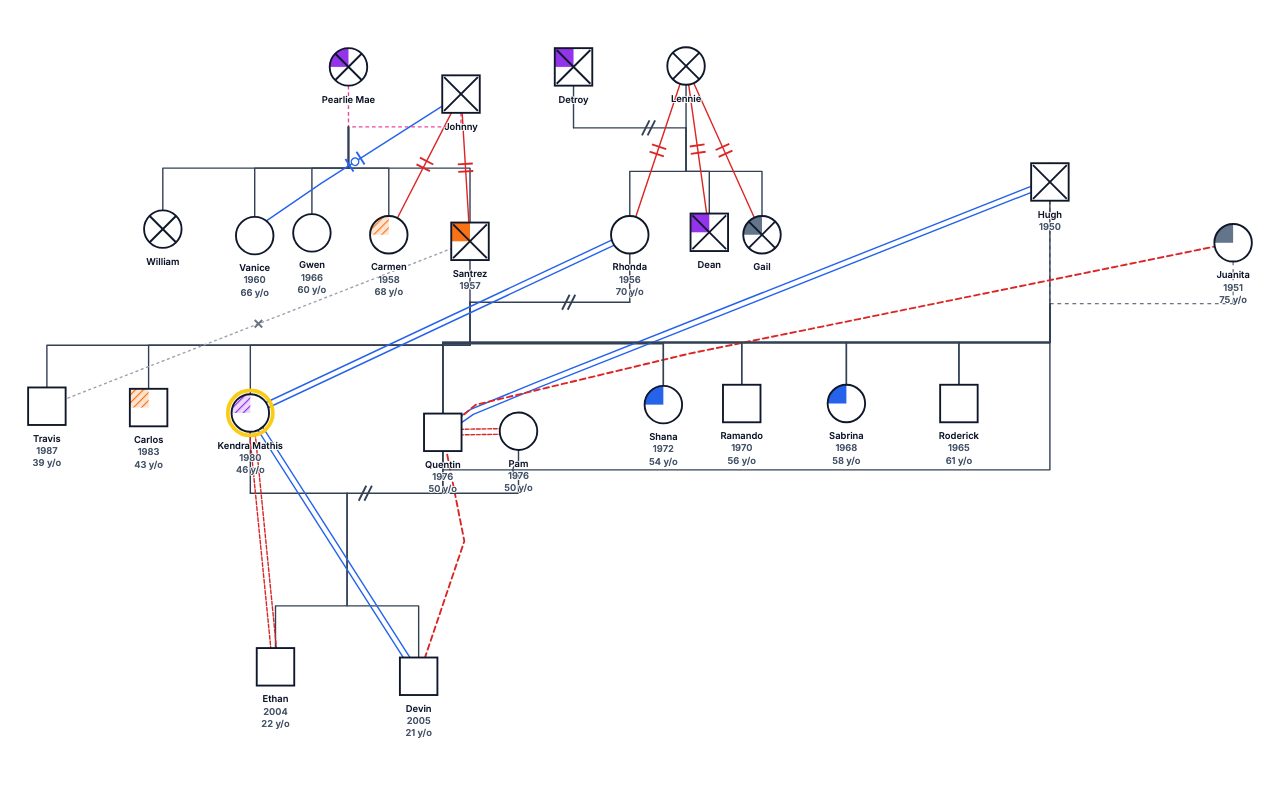
Kendra's Family Genogram
25 people · 4 generations · Blended family, 3 divorces/separations
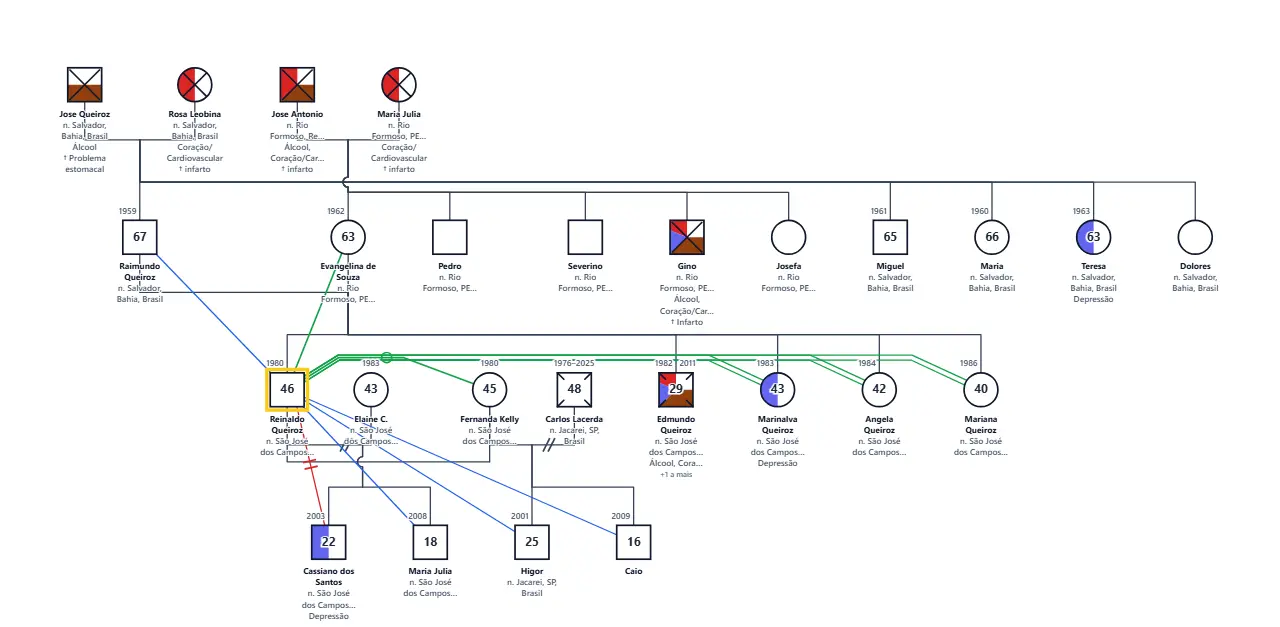
Reinaldo Queiroz's Family Genogram
26 people · 4 generations · Blended family, 2 divorces/separations
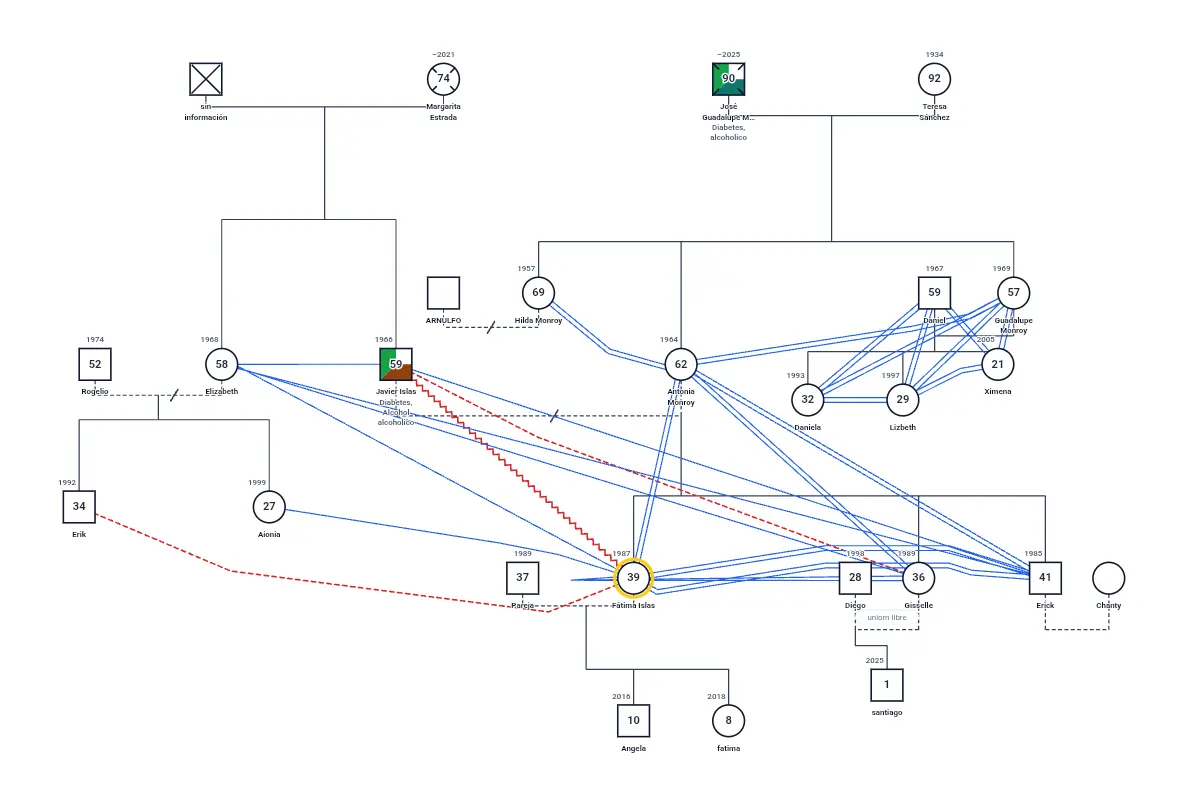
Fátima Islas's Family Genogram
26 people · 4 generations · Blended family, 3 divorces/separations
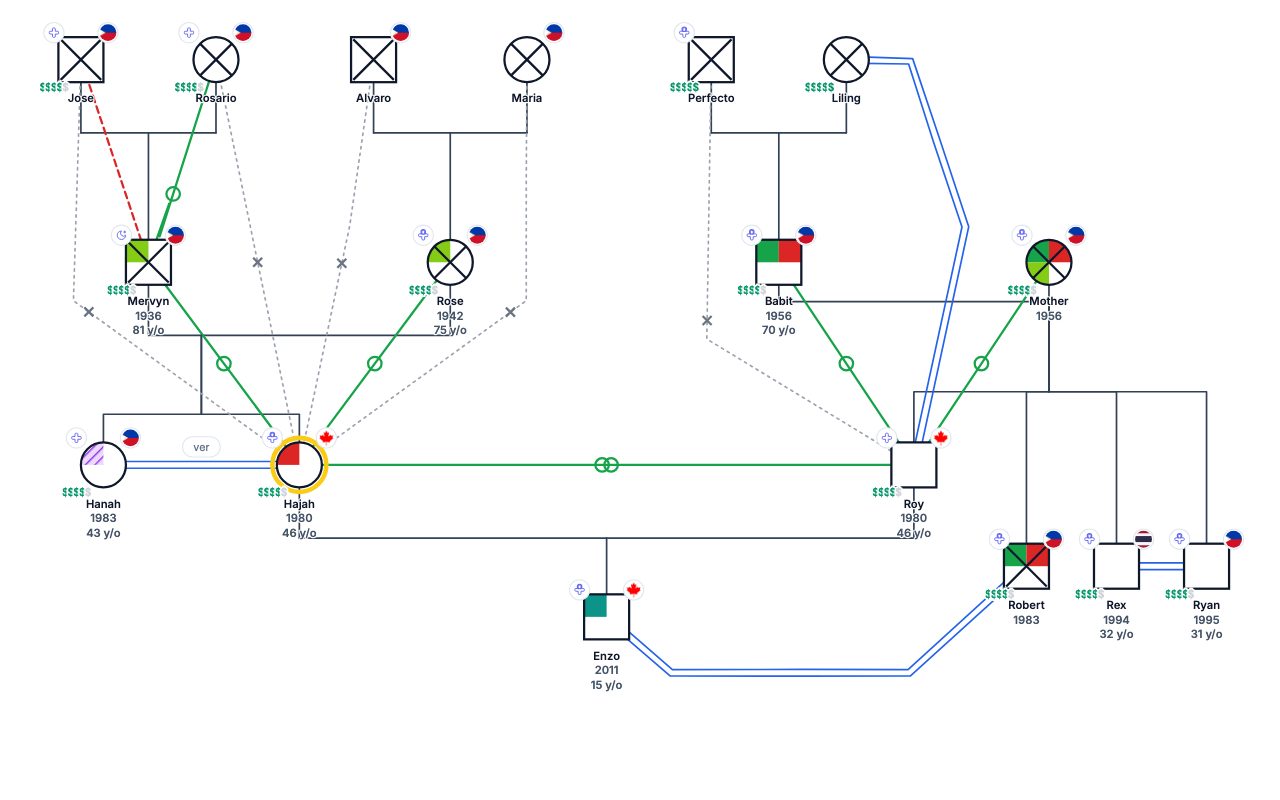
Hajah's Family Genogram
17 people · 4 generations · Emotional lines, Medical history
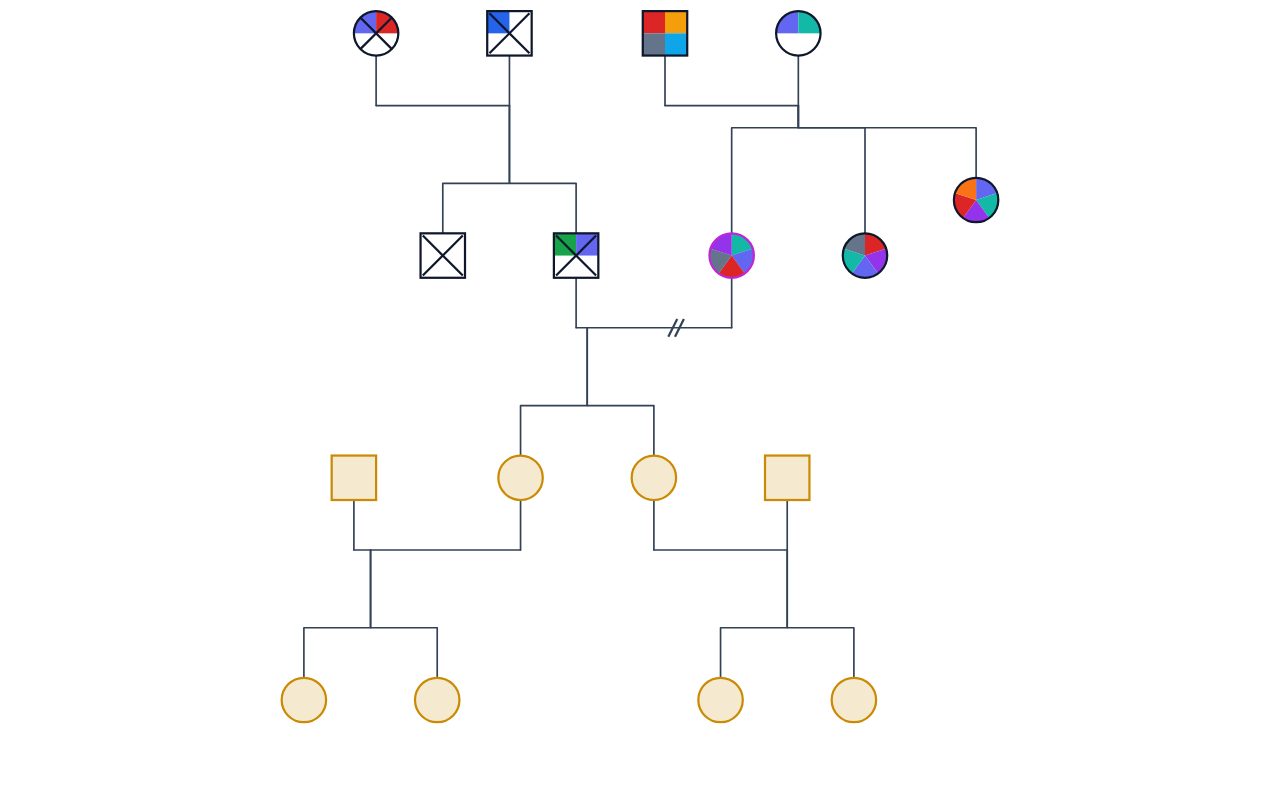
G's Family Genogram
17 people · 4 generations · Blended family, Divorce
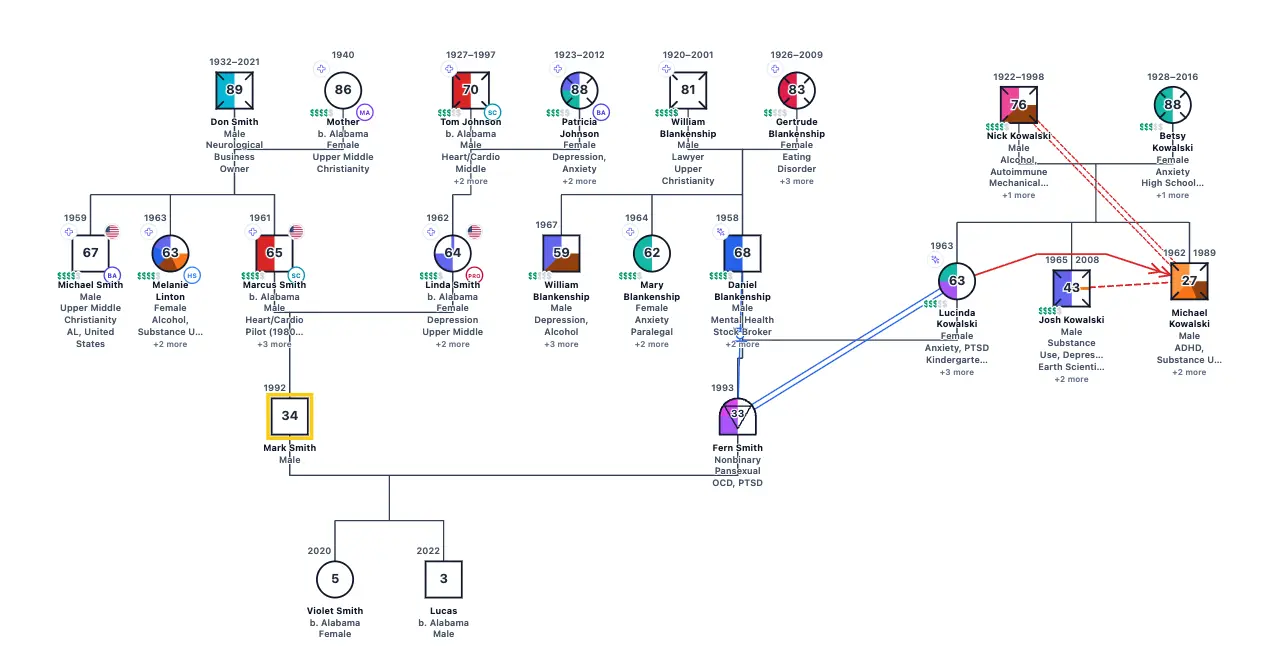
Mark Smith's Family (Copy) Genogram
22 people · 4 generations · Emotional lines, Medical history
About community genograms: a GenogramAI user published this genogram to the community gallery and chose to feature it on genogramai.com. It is shown as an illustration of genogram notation, not a clinical record. The owner can remove it at any time.