Clinical guide
Genograms in family therapy
Quick answer
The therapeutic power of genograms
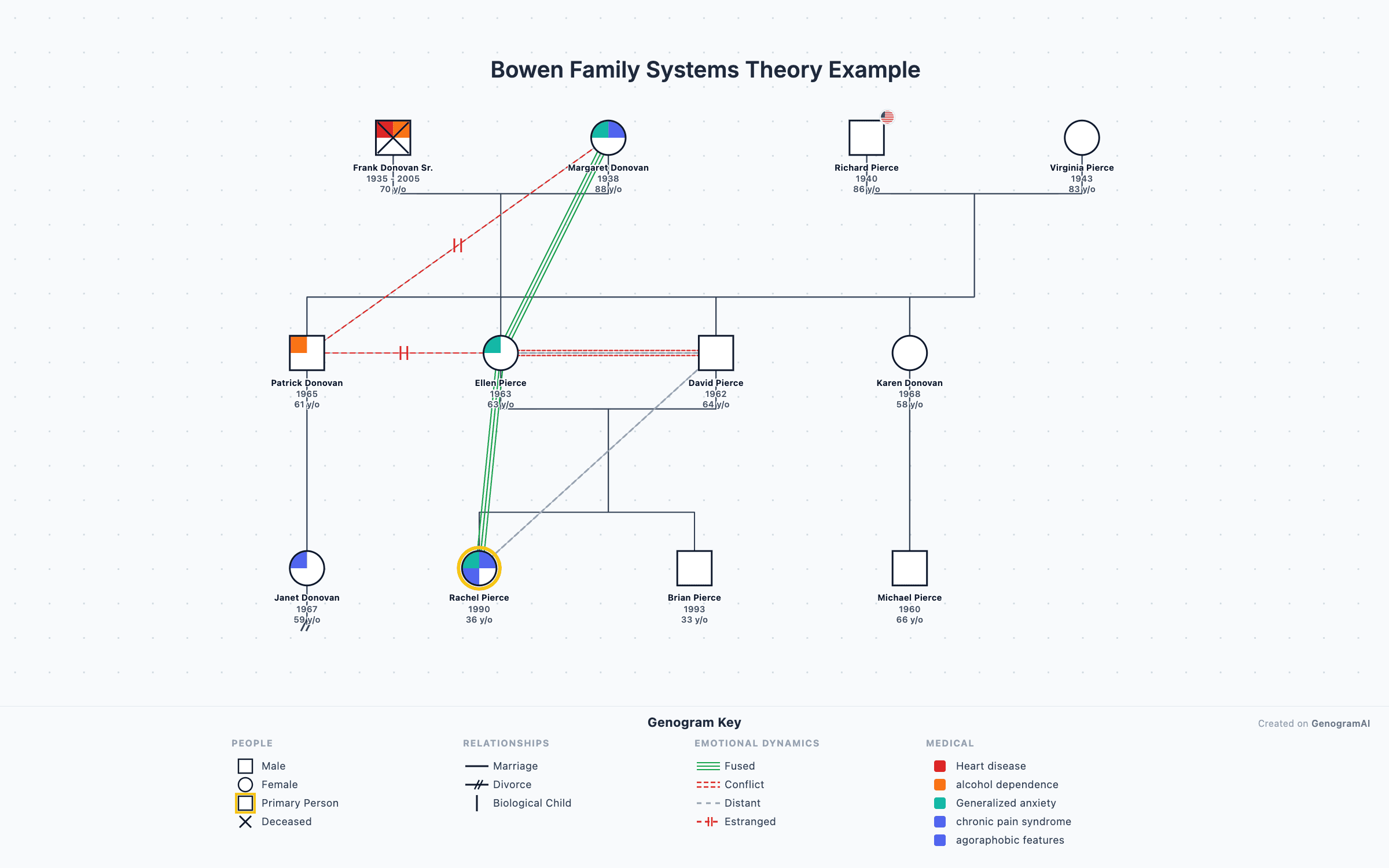
Genograms were developed specifically for therapeutic use by Monica McGoldrick and Randy Gerson in their seminal 1985 work. Building on Murray Bowen's family systems theory, genograms became essential tools for understanding how patterns of behavior, emotion, and relationship repeat across generations.
In family therapy, genograms serve multiple purposes: they're assessment tools, therapeutic interventions, and visual aids that help families see patterns they've been living but never recognized. The act of creating a genogram together can itself be profoundly therapeutic.
Classic reference
Theoretical foundations
Multigenerational transmission
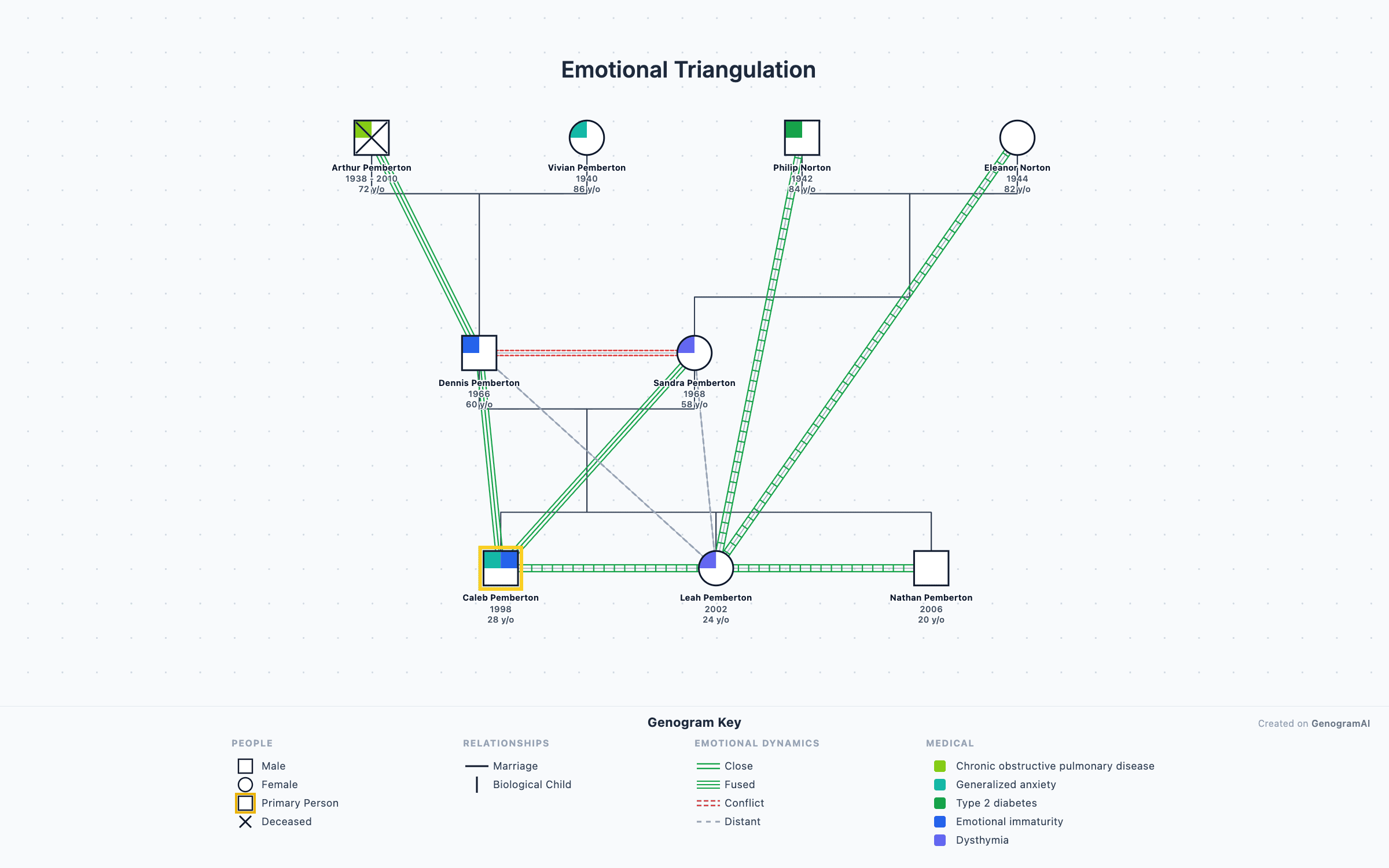
Triangulation
Differentiation of self
Repetitive patterns
What a genogram helps you assess
Family structure
- Household composition
- Blended family complexity
- Single-parent dynamics
- Extended family involvement
- Sibling positions and roles
Relationship patterns
- Emotional closeness and distance
- Conflict patterns
- Alliances and coalitions
- Enmeshment and cutoffs
- Caretaking dynamics
Life cycle issues
- Developmental stage transitions
- Timing of major events
- Anniversary reactions
- Unresolved losses
- Delayed milestones
Presenting problem context
- Symptom function in the system
- Previous similar crises
- Family response patterns
- Resources and strengths
- Barriers to change
Therapeutic techniques using genograms
Collaborative construction
Create the genogram together with the family. This process naturally generates therapeutic conversation as family members share perspectives, correct each other, and discover they have different views of the same relationships.
Try saying: "Mom says she and Grandma are close, but Dad described it as fused. Let's explore that difference."
Pattern identification
Use the visual map to help families see what they couldn't see before. Point to repeated patterns and let families make their own connections.
Try saying: "I notice something interesting: in each generation, the eldest daughter seems to become the family caretaker. Your grandmother did it, your mother did it, and now you're doing it. What do you make of that?"
Reframing through context
Genograms help reframe individual problems as systemic patterns. A "difficult teenager" might be seen differently when understood as playing a role that's been played in every generation.
Try saying: "Looking at your family, it seems like there's always been someone who carried the anxiety for the whole family. Your son isn't being difficult; he's inherited a role. How might we help him put that burden down?"
Breaking the pattern
Once patterns are visible, therapy can focus on conscious change. Families can decide which patterns to continue and which to transform.
Try saying: "Your family has three generations of men who cut off from their fathers after conflict. You're the first one who's chosen to stay and work it out. What would it mean to be the generation that changes this pattern?"
Genograms in couples therapy
What to explore
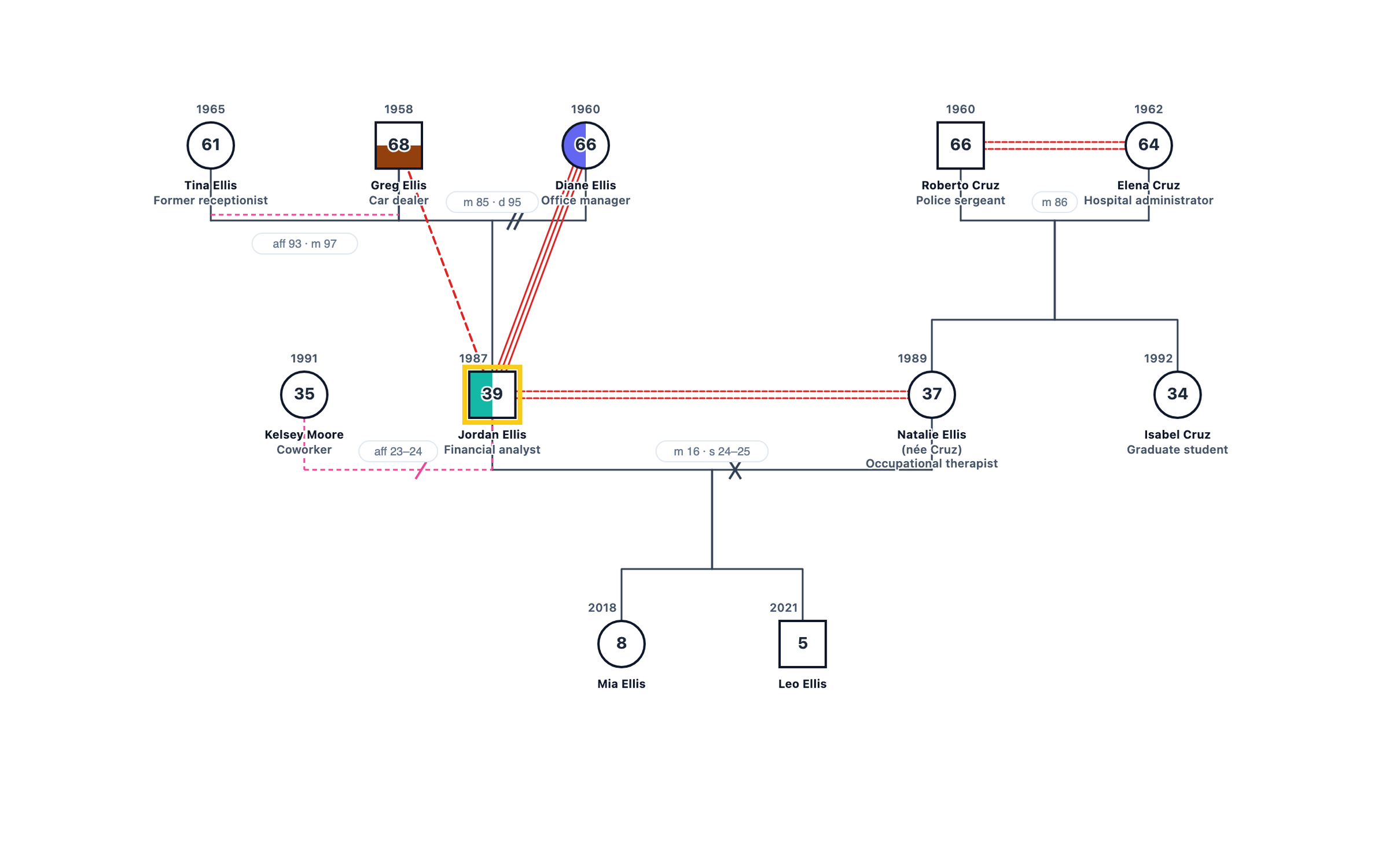
- How conflict was handled in each family
- Roles each partner played in their family
- Patterns around intimacy and distance
- Expectations from parents' marriages
- Unfinished business with family of origin
Common revelations
- "You withdraw like your father did"
- "I pursue because my mother always had to"
- "We're fighting our parents' battles"
- "Neither of us saw healthy conflict resolution"
- "We chose each other to heal old wounds"
Frequently asked questions
How do genograms fit into family systems theory?
Genograms are rooted in Bowenian family systems theory, which views the family as an emotional unit across generations. They help visualize concepts like differentiation, triangulation, emotional cutoffs, and multigenerational transmission—core concepts in family systems work.
When should I introduce a genogram in therapy?
Many therapists introduce genograms in the first few sessions as part of assessment. However, timing depends on presenting issues and client readiness. For trauma-related issues, it may be better to establish safety and rapport before exploring family history in detail.
How do I use a genogram with a couple?
Create genograms for both partners and compare them side by side. Look for complementary patterns (e.g., one from enmeshed family, one from distant family), similar unresolved issues, and how family-of-origin patterns show up in the current relationship.
What if clients don't know their family history?
Work with what they know. Missing information itself is meaningful—it may indicate cutoffs, family secrets, or trauma. Document unknowns clearly and explore what the gaps mean to the client. Even a partial genogram provides valuable insights.
Can genograms be harmful in therapy?
Genograms can surface painful memories or family secrets. Therapists should be prepared to contain strong emotions, pace the exploration appropriately, and have clinical rationale for what they explore. The genogram is a tool to serve therapy goals, not an end in itself.
Further Reading
- McGoldrick, M., Gerson, R., & Petry, S. — Genograms: Assessment and Treatment (4th ed.). W.W. Norton & Company, 2020
- Bowen, M. — Family Therapy in Clinical Practice. Jason Aronson, 1978
- DeMaria, R., Weeks, G., & Twist, M. — Focused Genograms: Intergenerational Assessment of Individuals, Couples, and Families (2nd ed.). Routledge, 2017
- Haley, J., & Hoffman, L. — Techniques of Family Therapy. Basic Books, 1967