GenogramAI
Back to Genogram Symbols
Intense AttachmentObsessive Pattern

Limerence Relationship Symbol in Genograms

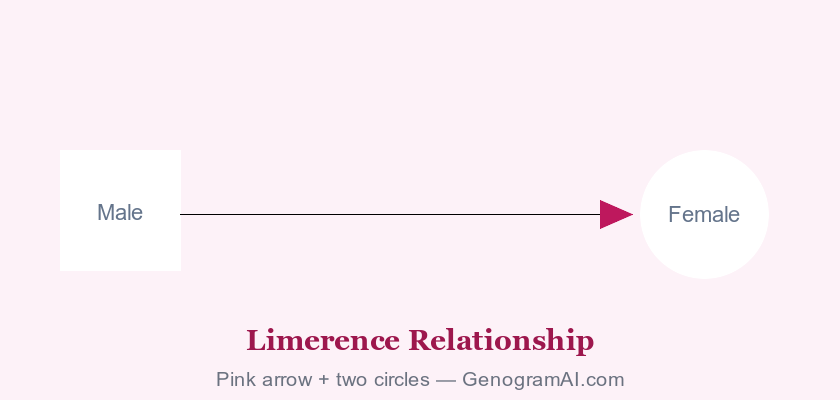
The limerence symbol—often depicted with a pink line and decorative circles—represents an intense, obsessive form of romantic or emotional fixation on another person. Coined by psychologist Dorothy Tennov in 1979, limerence describes a state of involuntary obsession characterized by intrusive thoughts, emotional dependency, and intense longing for reciprocation.

Person A
Person B

Limerence: Pink line with circles indicating obsessive fixation

What is Limerence?

Limerence is a psychological state of intense romantic desire and obsessive focus on another person, termed the "limerent object" (LO). Unlike mature love, limerence is characterized by:

  • Intrusive, uncontrollable thoughts about the person
  • Intense emotional dependency on perceived reciprocation
  • Physical symptoms: heart racing, trembling, flushing
  • Idealization of the limerent object
  • Fear of rejection reaching paralyzing proportions
  • Temporary elation when reciprocation seems possible

Dorothy Tennov's Research

Tennov's 1979 book "Love and Limerence" identified this as a distinct psychological state separate from love, attachment, or infatuation. She estimated limerence typically lasts 6 months to 3 years, though it can persist indefinitely without consummation or rejection.

Clinical Significance in Family Systems

Limerence appears in genograms when documenting:

  • Affairs where one party is limerent rather than in love
  • Unrequited attachments affecting family dynamics
  • Historical relationships that still hold emotional power
  • Patterns of obsessive attachment across relationships

Limerence vs. Love

Limerence: Obsessive, anxiety-driven, focused on gaining reciprocation
Love: Mutual care, security, focus on the other's wellbeing
Relationships may begin with limerence and evolve into love, or limerence may persist destructively.

Limerence in Affairs

A common clinical presentation involves a married person experiencing limerence for someone outside the marriage. The limerent person may:

  • Believe they've found their "true" soulmate
  • Compare their spouse unfavorably to the limerent object
  • Make impulsive decisions based on limerent feelings
  • Experience withdrawal symptoms when the affair ends

How to Use in GenogramAI

  1. 1Press E for Emotional Relationship tool
  2. 2Click on the limerent person
  3. 3Drag to the limerent object
  4. 4Select "Limerence" from the menu

Related Symbols

Document Complex Attachments

Use GenogramAI to map limerence and other intense emotional patterns.

Start Free