GenogramAI
Back to Genogram Symbols
Covert Pattern

Manipulative Relationship Symbol in Genograms

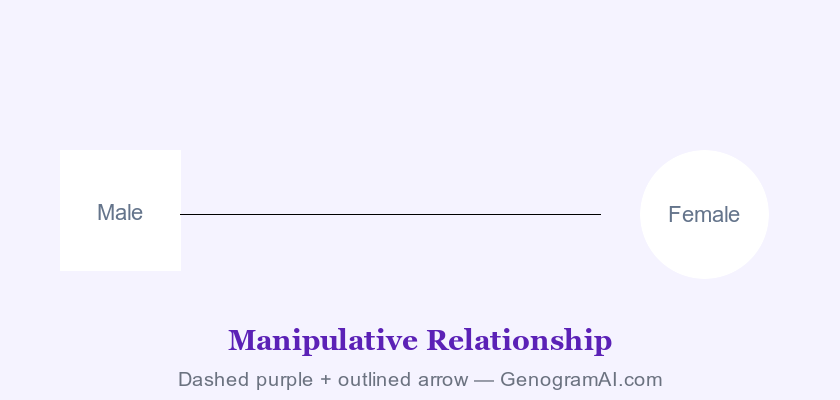
The manipulative symbol—an orange wavy arrow line—represents relationships characterized by indirect influence, psychological tactics, and covert control strategies. This documents patterns where one person influences another through deceptive or exploitative means rather than direct communication.

Manipulator
Target

Manipulative: Orange wavy arrow

Genogram manipulative relationship symbol showing S-curve purple line

Understanding Manipulation in Genograms

Manipulation represents indirect influence tactics that exploit psychological vulnerabilities. Unlike direct control, manipulation works through:

  • Guilt induction: Using guilt to influence behavior
  • Gaslighting: Making someone question their reality
  • Love bombing: Excessive affection to gain influence
  • Silent treatment: Withdrawal to punish or control
  • Triangulation: Using third parties to manipulate
  • Playing victim: Feigning victimhood to gain sympathy

Manipulation vs. Direct Control

The key distinction between manipulation and control:

  • Control is overt and direct—the target knows they're being controlled
  • Manipulation is covert—the target may not recognize the influence
  • Manipulation often leaves the target blaming themselves
  • Both can coexist in the same relationship

Common Manipulation Patterns

Family manipulation often follows recognizable patterns:

  • Emotional blackmail: "If you loved me, you would..."
  • Moving goalposts: Changing expectations constantly
  • Selective memory: Denying past agreements or events
  • Weaponized generosity: Gifts with strings attached

Generational Patterns

Manipulation tactics often transmit across generations. Children who grow up with manipulative parents may:

  • Adopt similar tactics unconsciously
  • Become hypervigilant to manipulation (potentially seeing it where it doesn't exist)
  • Have difficulty with direct communication
  • Struggle to recognize healthy influence vs. manipulation

When to Use This Symbol

The manipulative symbol documents covert influence patterns. Use it when clinical assessment reveals:

  • Parental guilt induction: A parent who consistently uses guilt, emotional withdrawal, or "after all I've done for you" framing to influence an adult child's decisions -- particularly around proximity, career choices, or partner selection. The adult child may not recognize the pattern until therapy.
  • Sibling triangulation: A family member who systematically relays distorted information between siblings to maintain a central position and control family dynamics. Each sibling receives a different version of events designed to create conflict or dependency on the manipulator.
  • Financial manipulation in elder care: An adult child who uses a parent's dependency to gain financial advantage, making decisions that benefit themselves while framing them as being "for Mom's own good." The manipulation may be subtle enough that other family members do not detect it.

How Manipulative Differs From Control

Manipulative vs. Control: Key Distinctions

  • Visibility: Control is overt -- "You are not allowed to go out tonight." Manipulation is covert -- "I just worry so much when you go out. Last time you went, I couldn't sleep at all." The target of control knows they are being restricted; the target of manipulation may blame themselves.
  • Mechanism: Control operates through direct authority, rules, or force. Manipulation operates through psychological tactics: guilt, gaslighting, selective affection, information control, or playing the victim.
  • Target awareness: People in controlling relationships often recognize the dynamic even if they feel powerless to change it. People in manipulative relationships may not realize they are being influenced until a third party (often a therapist) helps them see the pattern.
  • Symbol difference: The control symbol uses a directional line showing who controls whom. The manipulative symbol uses a wavy arrow line, reflecting the indirect, serpentine nature of the influence.

How to Add in GenogramAI

Steps to Document a Manipulative Relationship:

  1. 1Press E to open the Emotional Relationship tool, then click the manipulator and drag to the target of manipulation.
  2. 2Select "Manipulative" from the relationship type menu. The wavy directional arrow will appear showing the direction of influence.
  3. 3Add a clinical note describing the primary manipulation tactics observed (e.g., guilt induction, gaslighting, triangulation) to guide future therapeutic intervention.

Frequently Asked Questions

Is manipulation always intentional?

No. Many manipulative behaviors are learned survival strategies from childhood and operate outside conscious awareness. A parent who uses guilt may genuinely believe they are expressing love. The genogram documents the pattern and its impact, not the intent. Therapeutic work can help the manipulator develop awareness and alternative communication strategies.

Can manipulation be mutual?

Yes. In some families, multiple members use manipulative tactics with each other, creating a system where indirect communication becomes the norm. In such cases, you may need two manipulative arrows pointing in opposite directions, or a clinical note indicating mutual manipulation.

How do I bring up manipulation in therapy without the client becoming defensive?

Focus on the pattern rather than the label. Instead of saying "your mother is manipulative," explore the dynamic: "It sounds like when your mother expresses worry about your choices, you feel obligated to change your plans. What happens inside you when she does that?" Let the client name the pattern when they are ready.

Does the manipulative symbol imply pathology?

Not necessarily. While manipulation is associated with certain personality disorders, it can also appear in otherwise healthy individuals who learned indirect communication in families where direct expression was unsafe or unacceptable. The symbol documents the relational pattern, not a diagnosis.

Related Symbols

Map Covert Patterns

Start Free