GenogramAI
Back to Genogram Symbols
Severe PatternSafety Concern

Violence Relationship Symbol in Genograms

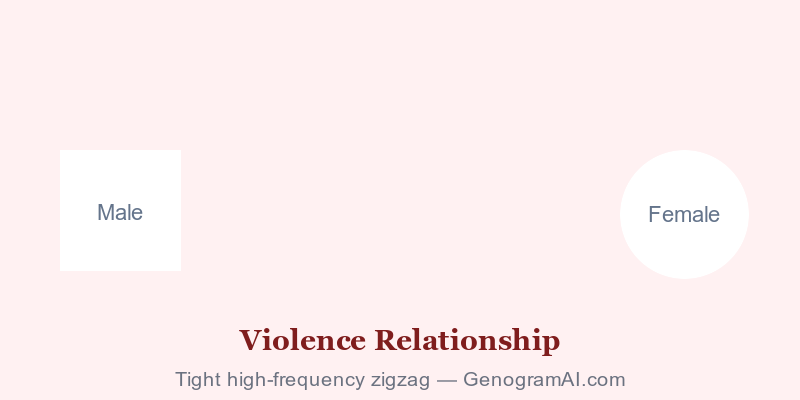
The violence symbol—a tight, intense zigzag line in red—represents relationships where physical aggression or violence has occurred. This is the most severe form of hostile relationship and requires immediate attention to safety planning before therapeutic exploration.

Safety First

If you or someone you know is experiencing violence, seek help immediately.

National DV Hotline: 1-800-799-7233

Violence: Tight red zigzag (more intense than hostile)

Genogram violence relationship symbol showing tight dark red zigzag

Understanding Violence in Genograms

The violence symbol documents relationships where physical aggression has occurred. This differs from the hostile symbol in intensity and the presence of physical harm or threat.

Clinical Protocol

When violence is documented on a genogram:

  • Safety planning must precede any other intervention
  • Assess current risk and protective factors
  • Document whether violence is historical or ongoing
  • Consider mandatory reporting requirements
  • Provide resources and safety information

Violence vs. Hostile vs. Conflict

  • Conflict: Disagreement, tension (dashed lines)
  • Hostile: Active antagonism, verbal aggression (zigzag)
  • Violence: Physical harm or threat (tight zigzag)

When to Use This Symbol

The violence symbol documents relationships where physical aggression has occurred or is occurring. Apply it in these clinical scenarios:

  • Intimate partner violence: A couple where one or both partners have engaged in physical aggression -- hitting, shoving, throwing objects, or restraining. Document whether the violence is unidirectional or bidirectional, and whether it is historical or ongoing.
  • Parent-child physical aggression: A parent whose discipline crossed into violence (leaving marks, causing injury), or an adolescent/adult child who has been physically aggressive toward a parent. This is distinct from the abuse symbol, which specifically captures the perpetrator-victim power dynamic.
  • Sibling violence beyond normal conflict: Siblings whose physical altercations have resulted in injury, required intervention, or created lasting fear. This goes beyond typical childhood roughhousing into a pattern that shapes family dynamics.

How Violence Differs From Hostile (Intensity)

Violence vs. Hostile: A Matter of Intensity

  • Physical threshold: Hostile relationships involve verbal aggression, antagonism, and emotional conflict. Violence crosses the line into physical acts -- hitting, shoving, throwing, or threatening physical harm.
  • Safety implications: Hostile relationships are therapeutically challenging but generally safe. Violence relationships require immediate safety assessment, safety planning, and potentially mandatory reporting before any therapeutic exploration.
  • Symbol intensity: The hostile symbol uses a standard zigzag. The violence symbol uses a tighter, more intense zigzag in red with a heavier stroke weight, visually communicating the escalation.
  • Clinical response: For hostility, a clinician may proceed with couples or family therapy. For violence, individual safety assessment comes first, and conjoint sessions may be contraindicated until safety is established.

How to Add in GenogramAI

Steps to Document a Violence Relationship:

  1. 1Press E to open the Emotional Relationship tool, then click the first person involved and drag to the second.
  2. 2Select "Violence" from the relationship type menu. The tight red zigzag will appear between the two individuals.
  3. 3Add a clinical note specifying whether the violence is historical or ongoing, its nature (physical, threat-based), and any relevant safety planning details.

Frequently Asked Questions

What is the difference between the violence symbol and the abuse symbol?

The violence symbol documents the presence of physical aggression in a relationship. The abuse symbol (zigzag with directional arrow) specifically captures a perpetrator-victim power dynamic with directionality. Violence can be mutual; abuse implies a pattern of one person harming another. A relationship may warrant both symbols, or one may be more clinically accurate depending on the dynamic.

Should I document a single violent incident?

Yes, if it significantly shaped the family dynamic. A single episode of violence -- even decades ago -- can define how family members relate to each other for generations. Use clinical notes to specify that it was a single incident rather than a pattern, and note its lasting impact on the family system.

Do I need to verify violence before documenting it?

Genograms reflect the client's reported experience, not independently verified facts. If a client reports violence, document it as reported. You may note the source of the information (e.g., "client reports" vs. "confirmed by multiple family members") in your clinical notes to distinguish levels of corroboration.

Can violence be documented multigenerationally?

Absolutely. Mapping violence across generations is one of the most powerful uses of the genogram. It can reveal patterns of intergenerational transmission, help clients see that violence is a learned behavior rather than an inherent trait, and motivate the work of breaking the cycle.

Related Symbols

Document with Care

GenogramAI provides professional documentation tools with sensitivity.

Start Free