GenogramAI
Back to Genogram Symbols
Intense Negative

Hate Relationship Symbol in Genograms

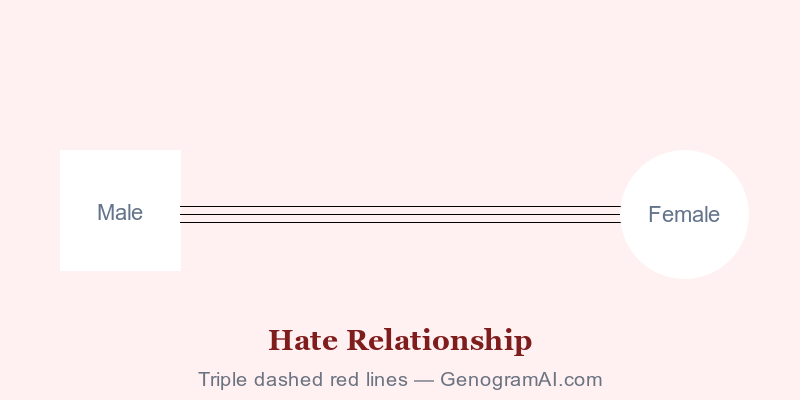
The hate symbol—three dashed red lines—represents the most intense form of negative feeling between family members. Unlike conflict or hostility which may fluctuate, hate suggests a deep, persistent aversion that colors all interactions and may be accompanied by wishes for harm.

Hate: Three dashed red lines

Genogram hate relationship symbol showing dark red zigzag with underline

Understanding Hate in Family Systems

Hate in genogram notation represents intense, persistent aversion. This is distinguished from temporary anger or even ongoing hostility by its deep-rooted, seemingly immutable nature.

Clinical Considerations

  • Hate often develops from severe betrayal or trauma
  • May mask profound hurt or grief
  • Often involves dehumanization of the hated person
  • Can be transmitted to other family members
  • May persist even after the hated person's death

Hate vs. Other Negative Patterns

Conflict: Disagreement, can be resolved
Hostile: Active antagonism, may fluctuate
Hate: Deep aversion, feels permanent

When to Use This Symbol

The hate symbol should be reserved for the most extreme cases of negative feeling. Use it when clinical assessment reveals:

  • Intractable aversion after betrayal: A parent who discovers a family member's severe betrayal (e.g., abuse of a child) and expresses a permanent, unwavering wish to never see that person again, coupled with active ill-will.
  • Post-divorce dehumanization: An ex-spouse who, years after separation, still refers to their former partner in dehumanizing terms and actively works to turn children against them, going beyond ordinary co-parenting conflict.
  • Inheritance or estate disputes that calcify: Siblings whose conflict over a deceased parent's estate has hardened into a permanent stance of loathing, where one or both express genuine hatred rather than mere resentment.

How Hate Differs From Hostile

Hate vs. Hostile: Key Distinctions

  • Permanence: Hostile relationships fluctuate in intensity and may include periods of civility. Hate feels immutable and total -- the person sees no possibility of change.
  • Emotional depth: Hostility involves active antagonism and anger. Hate goes deeper -- it often includes contempt, disgust, and a wish for the other person's erasure from one's life.
  • Engagement: Hostile individuals still engage, even if combatively. People who hate may refuse all contact, or if forced into proximity, display cold revulsion rather than heated argument.
  • Symbol difference: Hostile uses a standard zigzag line. Hate uses three dashed red lines, reflecting the deeper, more pervasive quality of the feeling.

How to Add in GenogramAI

Steps to Document a Hate Relationship:

  1. 1Press E to open the Emotional Relationship tool, then click the first family member and drag to the second.
  2. 2In the relationship menu, select "Hate" from the negative relationship types.
  3. 3Add a note describing the context or origin of the hatred -- this helps distinguish it from temporary hostility when reviewing the genogram later.

Frequently Asked Questions

Can hate be one-directional?

Yes. Unlike hostility, which is typically mutual, hate can be entirely one-sided. One person may harbor deep hatred while the other feels guilt, sadness, or indifference. When this is the case, document the directionality in your clinical notes.

Should I use the hate symbol if a client uses the word "hate" casually?

Not necessarily. Many people say "I hate my sister" when they mean frustration or anger. The hate symbol should be reserved for assessed, deep-rooted aversion that persists over time. Explore what the client actually means before selecting this notation.

Can a hate relationship ever become something else?

While rare, therapeutic work can sometimes shift hate into grief, acceptance, or even indifference. If the relationship changes over time, update the symbol accordingly. Some clinicians keep the original hate symbol with a date range and add the new symbol to show the progression.

How does hate differ from cutoff?

A cutoff is a behavioral action -- severing contact. Hate is an emotional state. They often coexist, but not always. A person may hate someone they still see regularly (e.g., at family gatherings), and a cutoff may stem from hurt or self-protection rather than hatred.

Related Symbols

Document Intense Emotions

Map even the most difficult family dynamics.

Start Free