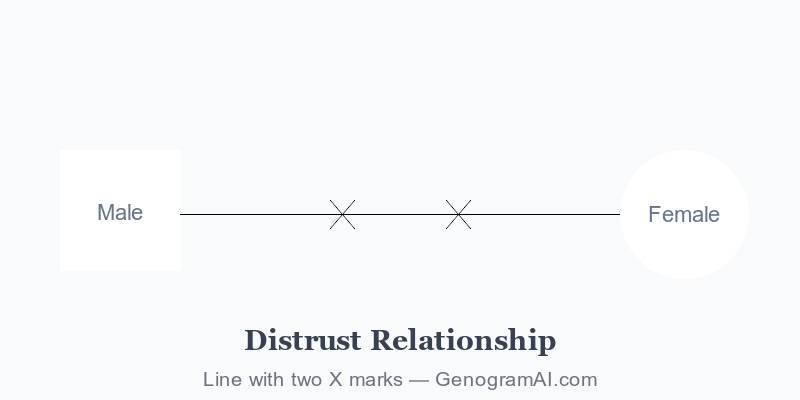
Understanding Distrust in Family Systems
Distrust represents a fundamental breakdown in the ability to rely on or believe in another family member. Unlike conflict (which may involve trust) or hostility (which may be openly expressed), distrust is often characterized by vigilance, suspicion, and protective guardedness.
Sources of Family Distrust
- Betrayal: affairs, financial deception, broken promises
- Patterns of dishonesty or unreliability
- Boundary violations that damaged sense of safety
- Addiction-related behavior
- Inherited distrust ("never trust your in-laws")
Clinical Significance
Distrust affects family functioning by:
- Limiting information sharing within the family
- Creating coalitions and secrets
- Preventing resolution of other conflicts
- Modeling suspicious relational patterns for children
When to Use This Symbol
- Post-betrayal relationships: When a family member has been caught in a significant lie, had an affair, or committed financial deception, the distrust symbol captures the ongoing relational damage even after the precipitating event has passed. It indicates that the wound to the relationship is about reliability and honesty, not just anger.
- Addiction-affected families: Family members of someone with active or past addiction often develop pervasive distrust — doubting the person's honesty, promises, and reported behaviors. This symbol documents that distrust specifically, distinct from hostility or distance that may also be present.
- Inherited family narratives: When distrust is passed down generationally through warnings ("never trust your uncle," "that side of the family always lies"), the symbol documents a relational pattern that may have no basis in the client's own experience but still shapes their behavior.
How This Differs From the Hostile Symbol
Distrust and hostility frequently coexist but describe different relational dynamics:
- Hostile relationships are characterized by open conflict — arguing, criticism, and confrontation. The people are actively fighting.
- Distrustful relationships are characterized by guardedness and suspicion. The people may not fight openly but interact with vigilance, secrecy, and doubt. Distrust operates beneath the surface.
- A relationship can be hostile without distrust (two people who fight but fundamentally believe each other is honest) or distrustful without hostility (two people who are polite but secretly check up on each other). When both are present, both symbols should be used.
How to Add in GenogramAI
- 1Press E to activate the Emotional Relationship tool, then click the first family member and drag to the second.
- 2In the relationship type menu, select Distrust. A black line with X marks will appear between the two individuals, indicating the broken trust.
- 3Add a note specifying whether the distrust is mutual or one-sided, its origin (betrayal, addiction, inherited narrative), and whether trust repair has been attempted.
Frequently Asked Questions
Can distrust be one-directional on a genogram?
Yes. It is common for distrust to flow in one direction — the betrayed person distrusts the betrayer, but not vice versa. When documenting one-sided distrust, add a directional note or use the symbol with a note clarifying which person holds the distrust. In GenogramAI, you can annotate the relationship line to indicate directionality.
How does distrust differ from a distant relationship?
Distance describes low engagement and emotional separation. Distrust describes suspicion and guardedness that may exist at any level of contact. Two people can be close (frequent contact, shared activities) yet deeply distrustful of each other — checking each other's phones, questioning motives, and withholding information. Conversely, distant relationships may involve no distrust at all, just a lack of connection.
Can distrust be repaired, and how does that show on a genogram?
Trust can be rebuilt over time through consistent behavior, accountability, and sometimes therapeutic intervention. As trust is restored, the genogram should be updated — the distrust symbol may be removed or changed to reflect the current relationship quality. Tracking this change over time shows therapeutic progress.
Should I document distrust that is based on accurate assessment rather than irrational suspicion?
Yes. The distrust symbol documents the relational dynamic regardless of whether the distrust is "justified." A person who distrusts a family member with a history of lying is responding rationally, but the distrust still shapes the relationship and warrants documentation. The clinical note can distinguish between evidence-based distrust and generalized suspicion.
Related Symbols